
Addiction Treatment

• Posted In Addiction Treatment

Your Guide to Success in an Intensive Outpatient Program

Transition smoothly with step-down and aftercare support in an intensive outpatient program for your recovery

Read More

Intensive outpatient program success depends on understanding your treatment options and committing to each step of care. An intensive outpatient program (IOP) offers structured therapy without requiring overnight stays, so you can maintain work, school or family responsibilities while receiving robust mental health and addiction support. Whether you’re transitioning from a partial hospitalization program or stepping down from residential care, this guide helps you navigate every phase of your IOP journey with confidence.

Understand intensive outpatient program
Intensive outpatient programs sit between a partial hospitalization program and standard weekly therapy, forming a key component of the continuum of care addiction. In an iop addiction treatment, you typically attend three-hour group and individual sessions four to five days a week for five to eight weeks. This level of care offers:

  • Flexibility to live at home or in a sober living environment
  • A blend of individual counseling, group therapy and psychiatry
  • Opportunities to apply coping skills in real-life situations
  • Access to holistic services like yoga, expressive arts and family therapy

By participating in an IOP, you gain intensive support while practicing new behaviors in your daily environment. Many programs also provide telehealth options, increasing access if you live far from treatment centers or need evening and weekend sessions.

Prepare for your program
Before your first IOP session, lay the groundwork for a smooth experience:

  • Assess your goals: Identify what you want to achieve—managing triggers, reducing symptoms or preventing relapse.
  • Coordinate providers: Share your intake paperwork with therapists, psychiatrists and your primary care team to ensure continuity of care.
  • Plan logistics: Arrange transportation, work or school leave, childcare and meal prep around your therapy schedule.
  • Set up your space: If you’ll join virtually, create a private, clutter-free area with reliable internet and necessary devices.
  • Build support: Let family members or close friends know your schedule so they can encourage attendance and celebrate milestones.

Thorough preparation reduces stress and allows you to focus on therapy from day one.

Engage in therapy sessions
Active participation makes your IOP effective. Typical components include:

Therapy typePurposeFrequency
Individual therapyPersonalized treatment planning and goal settingWeekly
Group therapyPeer support, sharing experiences and skill practice3–5 sessions per week
Psychiatry sessionsMedication management and symptom monitoringWeekly or biweekly
Expressive arts & holisticMindfulness, stress relief and creative exploration1–2 sessions per week
Family therapyImproving communication and relationship repairWeekly or as needed

In group therapy, you learn coping strategies alongside peers who understand your challenges. Your therapist guides discussions on cognitive behavioral techniques, motivational interviewing and relapse prevention. Individual sessions let you dive deeper into personal issues, track progress and adapt your treatment plan. Psychiatry visits ensure any medications support your recovery safely.

Apply coping skills
An IOP’s success hinges on practicing skills in real life and adjusting them with therapist feedback:

  1. Identify triggers
  • Track moods, situations and cravings in a journal
  • Recognize patterns linked to stress, people or environments
  1. Learn coping strategies
  • Use CBT tools to challenge negative thoughts
  • Apply DBT skills like distress tolerance and emotion regulation
  • Practice relaxation through breathing exercises, yoga or guided imagery
  1. Test skills outside sessions
  • Role-play conversations or difficult scenarios in group therapy
  • Implement new routines at work, school or home
  • Share outcomes with your therapist for fine-tuning

By immediately applying strategies in your daily context, you reinforce positive habits and address setbacks before they escalate.

Maintain daily responsibilities
Balancing therapy and life responsibilities is crucial. Try these tactics:

  • Time blocking: Schedule therapy, work or classes and personal time on a shared calendar
  • Communication: Inform supervisors or instructors about your IOP schedule to arrange flexibility
  • Healthy routines: Prioritize sleep, nutrition and exercise to boost focus and resilience
  • Tech solutions: Use telehealth options if available to reduce commute stress and maintain consistency
  • Peer check-ins: Connect with a friend or sponsor weekly to share goals and progress

A structured routine helps you honor both treatment and everyday commitments without feeling overwhelmed.

Transition through step down care
Your IOP can serve as a step-down care program if you’re moving from a partial hospitalization or residential setting. Conversely, you can step up into an IOP from less intensive outpatient therapy. Key transition paths include:

  • From residential to IOP: Coordinate with discharge planners for a seamless residential to outpatient transition
  • From PHP to IOP: Shift from day-long treatment to partial-day sessions, maintaining therapy intensity
  • From IOP to outpatient: Gradually reduce session frequency as you gain stability

These pathways ensure you receive the right level of support at each stage. Your treatment team will adjust your plan based on progress and ongoing needs.

Enhance long-term recovery
Completing an IOP is a major milestone, but ongoing care cements your gains:

Consistent engagement in aftercare and peer support dramatically lowers the risk of relapse and helps you build a fulfilling life in recovery.

Conclusion
Success in an intensive outpatient program requires preparation, active engagement and a commitment to lasting change. By understanding how IOP fits into your treatment continuum, planning your schedule, mastering coping skills and leveraging transitional and aftercare services, you set yourself up for sustainable progress. Remember that recovery is a journey—use each stage to learn, grow and move confidently toward your goals.



• Posted In Addiction Treatment

Take Control of Your Health Through a Partial Hospitalization Program

Take control of your health with a partial hospitalization program for outpatient and step-down care.

Read More

Understand partial hospitalization

When you enroll in a partial hospitalization program, you enter a structured day treatment setting that bridges inpatient care and less intensive models like an intensive outpatient program. A partial hospitalization program (PHP) delivers at least 20 hours of therapeutic services per week without requiring an overnight stay. This approach gives you the support and supervision you need while allowing you to maintain connections with home, work, or school.

What is a partial hospitalization program

A PHP is an intensive outpatient psychiatric or substance use disorder treatment offered at hospital outpatient departments or community mental health centers. You attend therapy and clinical services five to six days per week, typically 5–6 hours a day. The goal is to stabilize acute symptoms, build coping skills, and prepare you for lower levels of care.

Who benefits from PHP

You might consider a PHP if you:

  • Require more than weekly therapy but do not need 24/7 nursing care
  • Are transitioning from inpatient or residential treatment
  • Face co-occurring mental health and substance use challenges
  • Need structured support to prevent relapse

Inova Kellar Center’s Partial Hospitalization Program for youth and families demonstrates how PHP can stabilize acute psychiatric symptoms and provide a timely return to school and lower-intensity care (Inova Kellar Center).

Core program components

A typical PHP includes:

  • Group therapy to address peer support and social skills
  • Individual counseling for personalized treatment goals
  • Family counseling to strengthen your home support system
  • Psychiatric evaluations and medication management
  • Educational and experiential groups focused on life skills

Greater Boston Behavioral Health notes that PHPs treat anxiety, mood, trauma, and co-occurring disorders in a structured, supportive environment (Greater Boston Behavioral Health).

Compare outpatient options

To take control of your health journey, you can evaluate different levels of outpatient care: PHP, intensive outpatient, step-down care, and aftercare. Each model offers varying intensity and focus.

PHP versus IOP

Intensity and schedule

  • Partial hospitalization program
  • 20+ hours per week
  • Daytime attendance, no overnight stay
  • Five to six days weekly
  • Intensive outpatient program
  • 9–19 hours per week
  • Flexible evening or weekend sessions
  • Two to five days weekly

PHP delivers a higher level of support than an iop addiction treatment, making it ideal when you require daily clinical oversight but value daytime flexibility.

Services offered

FeaturePHPIOP
Group therapyYes, dailyYes, several times per week
Individual counselingYesYes
Medication managementOnsite psychiatric servicesOften via referral
Family involvementRegular family sessionsPeriodic sessions
Skill-building workshopsMultiple weeklyFewer, topic-based

Step-down care and aftercare

Step-down care program

A step-down care program acts as a transitional bridge if you’re exiting inpatient or residential treatment. You’ll receive continuing support as you adjust to community living, preventing abrupt drops in clinical oversight.

Aftercare support program

Following PHP or IOP, an aftercare support program helps you maintain gains through ongoing therapy, peer support groups, and check-ins. Structured aftercare reduces relapse risk and reinforces coping strategies.

Explore program benefits

A partial hospitalization program offers several advantages as you work toward recovery and mental health stability.

Structured therapy schedule

With daily sessions, you establish routines that replace unhelpful habits. A consistent schedule promotes accountability and skill practice in real time, accelerating your progress.

Peer support environment

Group therapy brings you together with individuals facing similar challenges. Sharing experiences fosters empathy, reduces isolation, and builds a community that can extend beyond the program.

Medical oversight

You benefit from onsite psychiatric care and medication management. Regular evaluations ensure your treatment plan adapts to your evolving needs, whether addressing mood disorders, trauma, or dual diagnoses in a dual continuum of care framework.

Plan your transition

Transitioning between levels of care requires planning. A thoughtful approach helps you sustain momentum and avoid setbacks.

Moving from inpatient care

When you step down from residential or hospital admission, coordinate with your treatment team to enroll in PHP. This ensures no gap in services during your residential to outpatient transition.

Residential to outpatient transition

  • Schedule your PHP intake before discharge
  • Gather prescriptions and medical records
  • Arrange transportation or telehealth access

Incorporating aftercare

Embedding aftercare into your plan secures your long-term success. Structured follow-up services keep you connected to support networks.

Structured aftercare services

  • Weekly therapy and support groups
  • Periodic psychiatric check-ins
  • Relapse prevention workshops

Post rehab outpatient program

A post rehab outpatient program offers tailored counseling and community support. It reinforces skills learned in PHP and guides you as you resume daily responsibilities.

Access and coverage

Cost and insurance considerations are critical when selecting a program.

Medicare Part B eligibility

Medicare Part B may cover partial hospitalization services if a doctor or qualified mental health professional certifies that inpatient treatment would otherwise be needed. Coverage applies when both the certifying provider and the PHP accept Medicare assignment (Medicare.gov).

Provider participation

Not all programs accept Medicare. Before enrolling, verify that your chosen facility enrolls in your plan and accepts assignment. If they do not, you may face out-of-pocket expenses.

Scheduling intake

To access services, you usually need a referral or intake appointment. For example, you can contact Inova Kellar Center at 703-218-2900 to schedule an intake with a mental health counselor. Early planning ensures you secure timely placement.

Choose your program

Selecting the right partial hospitalization program involves research and self-reflection.

Evaluating treatment approaches

Compare PHPs based on:

  • Therapeutic modalities (CBT, DBT, motivational interviewing)
  • Staff credentials (board-certified psychiatrists, licensed counselors)
  • Group sizes and peer demographics
  • Integration with aftercare and community resources

Questions to ask providers

  1. What is the average length of stay?
  2. How is treatment progress measured?
  3. What is the patient-to-staff ratio?
  4. How do you coordinate care with my existing providers?
  5. What support is available after PHP ends?

Next steps

  1. Research programs that match your clinical and logistical needs
  2. Verify insurance coverage and out-of-pocket costs
  3. Schedule assessments or tours to experience the setting
  4. Engage family or support contacts in planning
  5. Commit to the program schedule and goals

By understanding how a partial hospitalization program fits into the broader continuum of care addiction, you can choose the level of support that empowers you to manage symptoms, prevent relapse, and build lasting wellness. With careful planning and the right resources, you take control of your health journey and achieve sustainable recovery.


• Posted In Addiction Treatment

Why the Continuum of Care Addiction Matters in Treatment

Strengthen your recovery with continuum of care addiction programs from PHP and IOP to step-down & aftercare.

Read More

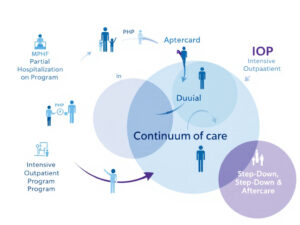
When you’re facing substance use challenges, understanding the continuum of care addiction model can guide your recovery journey. The continuum of care in addiction treatment offers a seamless pathway from intensive interventions to long-term support, ensuring you receive the right level of care when you need it most. By matching treatment intensity to your evolving needs, this approach minimizes gaps in care, reduces relapse risk, and promotes sustained recovery.

In this article, you’ll learn how the continuum of care framework works, explore key levels—such as partial hospitalization, intensive outpatient care, step-down programs, and aftercare—and discover evidence that ongoing support leads to better outcomes. Whether you’re planning your own treatment or supporting a loved one, you’ll gain clarity on each stage and practical tips for choosing the right services.

Understand continuum of care

What is the continuum of care?

The continuum of care addiction concept refers to a coordinated series of services that range from high-intensity treatment to ongoing support. It’s designed so you can enter treatment at the level you need—whether that’s a medical detox or a partial hospitalization program—and then step down to less intensive care as you stabilize and build skills.

Levels of care in addiction treatment

The American Society of Addiction Medicine (ASAM) defines five principal levels, but this article focuses on the outpatient-focused segments:

LevelIntensityTypical hours per weekGoal
Partial hospitalizationHigh (ASAM II.5)20–25Structured day treatment
Intensive outpatient careModerate (ASAM II)9–19Flexible recovery alongside life
Step-down careTransitionalVariesSmooth transition to outpatient
AftercareLow (ASAM I or less)OngoingRelapse prevention and support

Why this model matters

When care is fragmented—jumping from one level to another without coordination—relapse rates climb and outcomes suffer. Research shows that people who skip continuing care have only a 20% chance of remaining abstinent after one year, versus roughly 50% when they engage in ongoing support. A seamless continuum reduces those gaps and keeps you connected to resources as your needs evolve.

Explore partial hospitalization

Partial hospitalization programs (PHPs) provide a structured, substance-free environment during the day while allowing you to return home or to supportive housing in the evenings. This level bridges inpatient rehab and outpatient services.

Key features of PHP

  • Daily group therapy, individual counseling, and psychiatric support
  • Medical monitoring to manage withdrawal or medication needs
  • Life-skills training, relapse prevention planning, and family education

Who benefits from PHP?

  • Individuals needing more support than typical outpatient services
  • Those with co-occurring mental health conditions
  • People who require medical supervision but have safe living conditions

How PHP fits your journey

By enrolling in a partial hospitalization program, you can intensify treatment during critical early weeks and then step down to outpatient care once you’ve built coping skills. PHP reduces the risk of drop-out during the vulnerable post-detox phase by keeping you engaged in daily programming.

Examine intensive outpatient care

Once you’ve progressed through PHP or if you need moderate structure from the start, intensive outpatient care offers flexibility. You can maintain work, school, or family obligations while attending treatment sessions.

Structure of IOP

  • 3–5 group or individual therapy sessions per week
  • Educational workshops on relapse prevention and coping skills
  • Optional adjuncts like family therapy or nutrition counseling

Benefits of intensive outpatient care

  • Balances recovery with daily responsibilities
  • Encourages application of new skills in real-world settings
  • Often more cost-effective than residential programs

Comparing IOP options

FeatureOutpatient (Level I)IOP (Level II)
Session frequency1–2 weekly3–5 weekly
Duration45–60 days60–90 days
FocusMaintenanceEarly recovery skills

Exploring an intensive outpatient program or an iop addiction treatment option can help you choose a format that aligns with your schedule and recovery goals.

Evaluate step-down care

After completing higher-intensity treatment, step-down care programs support your transition back into everyday life while maintaining clinical oversight.

What is step-down care?

A step-down care program offers intermediate services between structured outpatient (IOP) and traditional outpatient therapy. It may include fewer weekly sessions but with targeted check-ins and flexible support.

Planning your transition

Effective step-down planning involves:

  • Coordinated handoffs between treatment teams
  • Clear goals for attendance, engagement, and skill practice
  • Scheduling support services in your community

For many, a residential to outpatient transition strategy includes enrollment in a step-down care program that ensures you’re not left unsupported once daily therapy ends.

Plan structured aftercare

Long-term recovery depends on ongoing support. Aftercare services help you reinforce skills, manage triggers, and stay connected to peers and professionals.

Importance of aftercare

Without a plan for continuing care, relapse risk increases significantly. Aftercare bolsters accountability, provides crisis intervention, and links you to community resources.

Types of aftercare services

  • Telephone check-ins and counseling
  • Alumni support groups and peer-led meetings
  • Continuing outpatient therapy or a post rehab outpatient program
  • Referral to employment, housing, or legal assistance

Enrolling in an aftercare support program or engaging with structured aftercare services ensures you have a safety net as you adapt to life beyond formal treatment.

Measure long term success

Ongoing data underscores the value of continuity in care. Several evidence-based interventions highlight how continuing support improves outcomes.

Evidence from research

  • Telephone Monitoring and Counseling (TMC) reduced criminal convictions by 54% over four years and improved substance use outcomes in randomized trials
  • Recovery Management Checkups (RMC) with quarterly assessments led to faster reentry into care when needed and cost savings compared to standard care
  • Mobile health tools like A-CHESS and ESQYIR texting programs decreased high-risk drinking days and boosted engagement, though sustained usage can wane without reinforcement

Impact on relapse prevention

Studies indicate that continuing care of at least 12 months with active patient outreach yields the most significant benefits. Incentives for abstinence during aftercare have been linked to longer continuous abstinence durations, reinforcing the importance of structured support.

Cost effectiveness

While intensive services carry higher upfront costs, preventing hospital readmissions and emergency interventions often offsets those expenses. Long-term engagement with lower-intensity services reduces total healthcare spending and improves quality of life.

Choose your treatment path

Selecting the right combination of services requires thoughtful assessment and collaboration with professionals.

Assess your needs

  • Identify co-occurring mental health concerns
  • Evaluate your living environment and support system
  • Determine work, school, or family obligations

Consult professionals

  • Seek an assessment from certified counselors or medical providers
  • Ask about program accreditation, staff qualifications, and success metrics
  • Clarify how transitions between levels are coordinated

Questions to ask providers

  1. How will my progress be evaluated at each stage?
  2. What does step-down planning look like for me?
  3. How do you integrate aftercare into the treatment plan?

By choosing services that align with your unique circumstances—whether a PHP, intensive outpatient program, step-down care, or aftercare—you set the stage for sustained recovery. Understanding the continuum of care addiction model empowers you to take an active role in your treatment and build a resilient foundation for lifelong wellness.


• Posted In Addiction Treatment

Why Your Healing Needs a Reliable Step-Down Care Program

Ensure your recovery thrives with a step-down care program guiding you from PHP and IOP to aftercare success.

Read More

You’ve made significant progress in residential treatment, but moving from around-the-clock care to everyday life can feel daunting. A reliable step-down care program bridges that gap, helping you maintain momentum, build independence, and reduce relapse risk. In this guide, you’ll learn what step-down care involves, how it fits into your overall continuum of care, and practical steps to access the right support for your recovery journey.

Understanding step-down care program

Definition and purpose

A step-down care program is a structured support service you enter after completing an intensive level of treatment such as inpatient rehab or a partial hospitalization program. It offers fewer daily therapy hours than full residential care but more support than standard outpatient treatment. By gradually reducing supervision, it gives you space to practice coping skills in real-world settings without feeling overwhelmed.

Role in continuum of care

Step-down care sits between high-intensity services and independent living on the continuum of care addiction. First, you might start in a partial hospitalization or inpatient program. As you demonstrate stability, you move into step-down care, then transition into an intensive outpatient program, and finally into ongoing aftercare. This progression ensures you never face abrupt shifts in structure or support.

Exploring treatment levels

Partial hospitalization program

A partial hospitalization program (PHP) is often your first step out of residential care. You’ll attend therapy and groups on-site for up to six hours daily, Monday through Friday, while returning home or to a sober living environment each evening. PHP reinforces daily routines and coping strategies before you step down into less intensive options.

Intensive outpatient program

After PHP, you may join an intensive outpatient program offering three to five therapy sessions per week, typically totaling 9–20 hours. An IOP helps you balance work, school, or family responsibilities with recovery. If you need specialized addiction counseling, ask about iop addiction treatment tracks that focus on relapse prevention and life-skills training.

Stepping down to less intensive care

Once you’ve met clinical milestones—such as sustained sobriety and active participation in therapy—your care team will recommend a step-down phase. This may involve:

  • Transitioning to a transitional living facility or sober house
  • Attending individual and group therapy 1–3 times per week
  • Participating in community support meetings

Your care team will coordinate this move during discharge planning, linking you to services like residential to outpatient transition and ensuring seamless handoffs.

Level of careIntensityWeekly hoursTypical setting
Partial hospitalization programHigh20+Day treatment center
Intensive outpatient programModerate9–20Outpatient clinic or community
Step-down care programTransitionalFlexibleSober living, transitional housing

Key benefits of step-down care

Gradual support reduction

  • Prevents overwhelm by easing you into independent routines
  • Builds confidence in applying coping skills outside a clinical setting
  • Maintains access to professional guidance while you adapt to daily life

Skill development and independence

  • Focuses on life-skills training such as budgeting, meal planning, and time management
  • Reinforces relapse prevention techniques through hands-on practice
  • Encourages taking responsibility for your recovery in a controlled environment

By combining structure with growing independence, step-down care programs help you internalize healthy habits before facing full autonomy.

Common hurdles

  • Limited program availability in some regions
  • High out-of-pocket costs if insurance coverage is incomplete
  • Difficulty maintaining accountability without constant supervision

Strategies for accountability

  1. Set up regular check-ins with a counselor or sponsor
  2. Create a daily schedule that balances obligations with self-care
  3. Engage friends or family members as recovery allies
  4. Use digital tools like mood-tracking apps or medication reminders

These tactics help you stay on track even as you take on more responsibility for your own care.

Accessing step-down care

Aftercare planning

Your aftercare plan should begin long before discharge from residential treatment. Work with your care team to outline:

  • Ideal setting (sober living vs outpatient only)
  • Therapy modalities and frequency
  • Medication management and monitoring
  • Links to structured aftercare services such as peer coaching or vocational support

A detailed plan prevents service gaps and ensures you know exactly where to turn when you leave high-intensity care.

Insurance and cost considerations

  • Verify which levels of care your insurance covers and any prior authorization requirements
  • Explore sliding-scale or scholarship programs offered by some providers
  • Compare out-of-pocket costs for transitional housing versus outpatient-only models

Understanding financial obligations upfront removes surprises and lets you focus on recovery instead of billing concerns.

Building a sustainable recovery

Aftercare support program

An aftercare support program keeps you connected to treatment resources long term. Components often include:

  • Ongoing individual counseling
  • Group therapy or alumni meetings
  • Family education sessions
  • Periodic clinical assessments

Consistent engagement with professionals and peers lowers relapse risk and reinforces accountability.

Community and peer connections

A strong support network is vital. Consider:

  • Participating in local sober living communities
  • Joining recovery-focused social groups
  • Attending alumni events hosted by your treatment center

Support groups and resources

These connections offer empathy, shared experience, and practical advice as you navigate life after formal treatment.

By choosing a reliable step-down care program, you give yourself the best chance to sustain progress, build resilience, and enjoy lasting recovery. With a clear roadmap—from PHP and IOP to aftercare support—you’ll move forward with confidence, backed by a continuum of care designed around your needs.


• Posted In Addiction Treatment

IOP Addiction Treatment: A Confident Path to Healing

Confidently navigate your iop addiction treatment through structured outpatient step-down care and aftercare

Read More

IOP addiction treatment offers a structured and flexible approach that helps you balance recovery with your daily life. As a level of care positioned between residential programs and traditional outpatient therapy, an intensive outpatient program (IOP) delivers several hours of treatment each week while you live at home and maintain your responsibilities. By choosing iop addiction treatment, you benefit from evidence-based therapies, peer support, and real-world skill practice that reinforce long-term sobriety.

Whether you’re transitioning from a partial hospitalization program or stepping down from inpatient care, an IOP can be a confident path to healing. You’ll work with therapists, medical staff, and support networks to build coping strategies, address underlying issues, and develop a relapse-prevention plan. This article guides you through the continuum of care, compares different levels, highlights key benefits, and shows you how to integrate aftercare support for lasting recovery.

Define IOP addiction treatment

What you receive in an IOP differs from standard outpatient therapy by intensity and structure. In most cases, you’ll attend nine to twenty hours of treatment per week, spread over three to five days. Sessions include individual counseling, group therapy, family involvement, and skills workshops. You return home each evening, giving you the chance to apply coping mechanisms in real-life settings.

What is an IOP program

An IOP sits on the continuum of care between a partial hospitalization program and a regular outpatient clinic. Unlike inpatient rehab, you don’t live onsite or require 24-hour supervision. Instead, you follow a personalized schedule with these core components:

  • Individual therapy to explore personal triggers and emotional health
  • Group therapy for peer support and shared learning
  • Psychoeducational sessions on relapse prevention, mindfulness, and stress management
  • Family or significant-other meetings to build a strong support system

Who is a candidate

You’re a good fit for iop addiction treatment if you:

  • Don’t need medical detox or round-the-clock care
  • Have a safe, supportive home environment
  • Can commit to a structured weekly treatment schedule
  • Require more support than traditional outpatient counseling
  • Seek continuity after residential to outpatient transition

If you’re leaving a higher level of care, such as a residential program, an IOP often serves as an effective next step. You’ll maintain momentum while practicing new skills at home, which improves your readiness for long-term recovery.

Compare levels of care

Choosing the right level depends on your clinical needs, living situation, and personal responsibilities. Here’s a comparison table that outlines key differences between partial hospitalization, intensive outpatient, and aftercare services:

Level of careIntensityLiving arrangementTypical durationFocus
Partial hospitalization program20–25 hours per weekOn-site stay2–4 weeksMedical supervision, therapy
Intensive outpatient program (IOP)9–20 hours per weekHome-based2 months to 1 yearEvidence-based therapies
Structured aftercare servicesVariableHome-basedOngoing post-treatmentPeer support, skill reinforcement

Partial hospitalization vs IOP

In a PHP you spend most of your day at the facility, often living onsite. PHP suits those who need intensive medical and psychiatric support during early recovery. By contrast, IOP provides enough structure to stabilize cravings and mood without disrupting work, school, or family life.

Residential to outpatient transition

After completing inpatient rehab, you may feel ready to resume daily routines but still require professional guidance. An intensive outpatient program helps you bridge that gap. You’ll meet peers facing similar challenges, practice coping strategies in your own environment, and gradually increase your independence under clinical oversight.

Explore benefits of IOP

IOP addiction treatment delivers distinct advantages that support your recovery journey.

Flexibility and privacy

Because you return home after each treatment day, you retain privacy about your recovery status. You can control which details to share with employers, colleagues, and peers. At the same time, you’ll continue meeting personal, educational, and professional obligations without uprooting your life.

Real-life skill application

Learning mindfulness, stress reduction, and relapse-prevention strategies in a clinical setting is one thing; practicing them at home is another. An IOP lets you implement new coping skills immediately and discuss challenges in the next session. This real-world reinforcement strengthens your ability to handle triggers outside the treatment center.

Peer support and accountability

Group therapy in an IOP offers a sense of camaraderie similar to residential programs. Sharing experiences, successes, and setbacks with peers fosters accountability and reduces isolation. You’ll build relationships that extend beyond the program, creating a network you can rely on during critical moments of temptation or doubt.

Structured step-down care

If you’ve completed a partial hospitalization program, shifting to an IOP is a logical step-down care program. You gradually lower treatment intensity while preserving a consistent support structure. This phased approach minimizes the risk of relapse and eases your return to full independence.

Build your IOP schedule

An effective IOP balances consistency with personalized flexibility. Your care team will design a treatment plan that aligns with your goals, medical needs, and daily responsibilities.

Typical weekly schedule

Most IOPs offer morning, afternoon, and evening sessions to accommodate varied schedules. A sample week might look like this:

  1. Monday, Wednesday, Friday: group therapy and skills workshop (3 hours each)
  2. Tuesday, Thursday: individual counseling (1 hour) plus family session or vocational support (2 hours)
  3. Optional weekend check-in or peer support meeting

Total weekly hours usually range from 9 to 20, depending on your clinical assessment and progress.

Core therapeutic elements

Your IOP plan may include:

  • Cognitive behavioral therapy to identify and reshape negative thought patterns
  • Motivational interviewing to strengthen your commitment to change
  • Dialectical behavior therapy components for emotion regulation
  • Trauma-informed care if you’ve experienced adverse events contributing to substance use
  • Medication management or referral for pharmacotherapy when appropriate

By integrating these modalities, your treatment addresses both addiction and any co-occurring mental health concerns.

Integrate aftercare support

Long-term recovery extends beyond the close of your IOP. Structured aftercare services help you maintain progress and navigate life’s challenges.

Leverage community resources

Connecting with local support groups, alumni networks, and mentors reinforces accountability. You can join a post rehab outpatient program or participate in community-based meetings. These options provide ongoing encouragement and practical advice from people who understand your journey.

Involve family and peers

Family therapy sessions often continue as part of an aftercare support program. Educating loved ones about addiction, boundary setting, and communication skills strengthens your home environment. When your support circle shares a recovery framework, you’re less likely to encounter triggers that undermine your progress.

Develop a relapse-prevention plan

Work with your clinician to outline warning signs, coping strategies, and emergency contacts. Your relapse-prevention plan should include:

  • Daily self-check-ins using mood and craving journals
  • Scheduled attendance at support meetings
  • Contact information for sponsors, therapists, and crisis lines such as the 988 Suicide & Crisis Lifeline
  • Strategies for high-risk scenarios like social events or stress-inducing situations

Evaluate success factors

Your commitment and active engagement directly influence IOP outcomes. Research shows that 50% to 70% of participants maintain abstinence at follow-up, rates comparable to inpatient treatment when you fully participate in sessions and practice skills outside therapy (Journal of Substance Abuse Treatment, 2020).

Commitment and participation

To maximize benefits you should:

  • Attend all scheduled sessions
  • Engage honestly in group discussions
  • Complete homework assignments such as journaling or mindfulness exercises
  • Communicate openly with your care team about challenges and progress

Measuring your progress

Regular assessments track improvements in mental health, substance use, and quality of life. Your clinician may use standardized tools to gauge symptom reduction, coping skill application, and social reintegration. Reviewing these metrics helps you and your care team adjust your treatment plan as needed.

Accessing IOP programs

Finding and financing the right IOP ensures you receive quality care without unnecessary barriers.

Insurance and cost considerations

Many health insurance plans cover IOP addiction treatment fully or partially. Your out-of-pocket cost may depend on:

  • Deductible and co-payment amounts
  • Duration and intensity of the program
  • Inclusion of family therapy and medication management

Verify benefits with your provider and the IOP facility before enrolling. Some centers also offer sliding-scale fees or payment plans.

Finding a program near you

You can search for accredited providers on FindTreatment.gov, the confidential resource managed by the Substance Abuse and Mental Health Services Administration. If you’re referred from inpatient care, ask your discharge planner about reputable IOP providers and structured aftercare services in your area.

Conclusion

IOP addiction treatment bridges the gap between intensive inpatient care and traditional outpatient therapy, giving you the structure, flexibility, and real-world practice needed for lasting recovery. By understanding your options—from a partial hospitalization program to an aftercare support program—you can design a personalized path that support your goals. Commit to participating fully, leverage family and community resources, and follow a well-defined relapse-prevention plan. With the right program and ongoing support, you’ll gain the confidence and skills to sustain sobriety and embrace a healthier future.


• Posted In Addiction Treatment

Understanding Your Options Within the Dual Continuum of Care

Find your path to recovery within the dual continuum of care with PHP, IOP, step-down care and aftercare.

Read More

Understanding the dual continuum of care can help you navigate structured outpatient levels and transitional services with confidence. Whether you’re stepping down from inpatient treatment or seeking ongoing support, knowing how each program fits into your recovery journey empowers you to make informed choices that foster lasting wellness.

Understanding dual continuum of care

What dual continuum entails
The dual continuum of care recognizes that recovery from substance use and mental health conditions involves two intertwined yet distinct dimensions: symptom reduction and positive wellbeing. While traditional treatment often focuses on alleviating clinical symptoms, the dual continuum model emphasizes building emotional, psychological, and social health alongside reducing substance-related harms. You may find this approach more holistic, since it addresses both the absence of illness and the presence of thriving.

Origins of the dual continuum model
Researchers in the Netherlands introduced the two continua model in 2010, demonstrating that mental illness and positive mental health are related but distinct dimensions. In person-centered analyses of Dutch adults, about one third were flourishing without mental illness, while others experienced mental illness without flourishing. This insight underscores why a single focus on symptom relief may leave you short of full recovery and why integrated treatment plans are essential.

Applying dual continuum to co-occurring disorders
When you’re managing co-occurring mental health challenges and substance use, an integrated treatment plan aligns with the dual continuum. This means combining medication-assisted therapies with evidence-based psychotherapies, ensuring that you receive consistent messaging and coordinated care across disciplines. Collaborative care strategies—such as regular multidisciplinary team meetings and comprehensive documentation—help clinicians address both facets of your health simultaneously, reducing relapse risk and improving engagement.

Exploring care levels

Partial hospitalization program

A partial hospitalization program (PHP) offers a high-intensity, structured environment while allowing you to return home each day. PHP is ideal if you need daily clinical support but want to maintain connections with your family or workplace. Typical features include:

  • Program hours: 4–6 hours per day, 5 days per week
  • Treatment components: individual therapy, group counseling, psychiatric medication management
  • Focus areas: acute symptom stabilization, crisis intervention, skill building
  • Duration: 4–6 weeks on average, adjustable based on your progress

Intensive outpatient program

An intensive outpatient program (IOP) provides flexible scheduling with significant therapeutic contact. If you require structured sessions but have fewer acute needs, IOP bridges the gap between PHP and lower-intensity care. Key aspects include:

  • Weekly commitment: 9–15 hours of therapy across multiple days
  • Therapies offered: cognitive behavioral therapy, relapse prevention, family education
  • Peer support: group sessions foster accountability and shared experiences
  • Integration: you can continue work or school while engaged in treatment

Many clients also explore iop addiction treatment to address substance use disorder specifically within the IOP framework.

Step-down care program

Once you complete PHP or IOP, a step-down care program eases your transition to less intensive services. Step-down care typically includes:

  • Reduced frequency: 1–3 group sessions per week
  • Ongoing coaching: check-ins with a therapist or case manager
  • Skill reinforcement: workshops on stress management, social skills, healthy habits
  • Peer networks: alumni groups and mentorship opportunities

Aftercare support program

Long-term recovery thrives on consistent support. An aftercare support program or structured aftercare services can include:

  • Weekly or biweekly therapy sessions
  • Peer-led support groups (in-person or virtual)
  • Family counseling and educational workshops
  • Access to a post rehab outpatient program for relapse prevention

Enhancing your aftercare with community resources and digital tools helps maintain momentum as you reestablish routines.

Comparing program intensities

Here’s a side-by-side look at key features of each level in the dual continuum of care:

Program levelWeekly hoursPrimary focusTypical length
Partial hospitalization program20–30Acute stabilization, skill building4–6 weeks
Intensive outpatient program9–15Relapse prevention, peer support6–12 weeks
Step-down care program3–6Transition coaching, group workshops4–8 weeks
Aftercare support program1–3Long-term maintenance, educationOngoing

Understanding these differences helps you and your care team select the right combination of services at each stage of recovery.

Transitioning through care

Residential to outpatient transition
When you move from inpatient treatment to less restrictive settings, a structured handoff ensures continuity. A dedicated case manager will coordinate your residential to outpatient transition, sharing treatment plans and noting any co-occurring conditions. This process prevents gaps in care and supports your steady progress.

Maintaining relational continuity
Research shows that ongoing therapeutic relationships improve outcomes in serious mental illness. At Rogers Behavioral Health, analysis of over 70,500 patient outcomes found that clients who completed multiple levels of care—following the clinical pathway from inpatient to residential to partial hospitalization and intensive outpatient—experienced significantly fewer depressive symptoms at discharge. By adhering to a seamless continuum, you benefit from consistent support and clearer treatment goals.

Overcoming common transition barriers
Shifting between care levels can be challenging. You might face:

  • Scheduling conflicts with work or school
  • Insurance authorizations and coverage limits
  • Emotional uncertainty about less supervision

Working with providers who prioritize flexibility—such as offering evening IOP sessions or telehealth check-ins—can help you navigate these barriers without sacrificing treatment quality.

Enhancing aftercare support

Building a durable support network
After formal treatment ends, your recovery relies on the connections you cultivate. Consider:

  • Peer support groups (12-step or non-12-step)
  • Sober living homes with on-site programming
  • Alumni events through your treatment center

Structured aftercare services often include family involvement, which strengthens your social well-being and fosters understanding among loved ones.

Leveraging digital and community tools
Online recovery platforms and mobile apps can supplement in-person care. You might use:

  • Teletherapy for convenient check-ins
  • Recovery apps for mood tracking and reminders
  • Online forums for 24/7 peer encouragement

Combining these tools with local resources—like community mental health centers—ensures you have multifaceted support.

Planning your next steps

Choosing the right mix of services within the dual continuum of care comes down to your current needs and life circumstances. Start by discussing with your clinician whether a higher-intensity setting (PHP or IOP) is warranted, then map out a step-down sequence that transitions smoothly into aftercare. By staying engaged at each level of care, you’ll build both symptom relief and positive wellbeing, setting the stage for a resilient, fulfilling recovery journey.


• Posted In Addiction Treatment

Structured Aftercare Services: Key Steps to Maintain Your Progress

Discover structured aftercare services that ease your shift from PHP and IOP while protecting your recovery.

Read More

You’ve made significant strides in your recovery journey, and now structured aftercare services can help you maintain that progress. Structured aftercare services provide ongoing support after initial treatment, guiding you through a step-down approach from intensive care to more flexible, long-term programming. By integrating options like a partial hospitalization program, intensive outpatient program, and tailored relapse prevention planning, you build a clear roadmap for sustained sobriety.

Unlike short-term rehab, structured aftercare emphasizes continuity of care, relapse prevention, life skills training, and community support. Whether you transition through a step-down care program or join an aftercare support program, these services help you reintegrate into daily life while managing triggers and stressors. Let’s explore the key steps to design and follow a structured aftercare plan that keeps you on track.

Understand structured aftercare services

Structured aftercare services are coordinated forms of support following initial addiction treatment. Their core goals are to:

  • Maintain therapeutic gains from rehab
  • Prevent relapse through proactive strategies
  • Build daily routines filled with healthy activities
  • Offer flexible treatment intensity over time

By viewing recovery as a continuum, you move seamlessly from higher-intensity care—such as a partial hospitalization program or inpatient stay—to lower-intensity options like an intensive outpatient program. This “step-down” design reduces the shock of sudden independence and reinforces coping skills in real-world settings.

Difference from rehab

Rehab programs focus on stabilization, detox, and intensive therapy within a highly structured environment. In contrast, aftercare is:

  • Less time-limited and more adaptable
  • Centered on relapse prevention and life management
  • Delivered via outpatient services, peer groups, sober housing, and telehealth
  • Designed to last at least 6 to 12 months, with some plans extending longer

Explore aftercare options

You have several pathways for structured aftercare. Each offers unique benefits and levels of support.

Partial hospitalization

A partial hospitalization program (PHP) sits just below inpatient care in intensity. You typically attend therapy for 4–6 hours per day, several days a week, then return home in the evenings. PHP provides:

  • Comprehensive medical supervision
  • Individual and group therapy sessions
  • Skills workshops (stress management, communication)
  • Coordination with your outpatient psychiatrist or therapist

Intensive outpatient

An intensive outpatient program (IOP) or iop addiction treatment requires fewer hours—usually 9 to 15 per week—while still offering structured counseling, relapse prevention, and peer support. Ideal candidates for IOP have:

  • Stable housing and reliable transportation
  • Low to moderate relapse risk
  • A supportive home environment

Step-down care program

A step-down care program bridges the gap between inpatient/residential stays and full independence. It tailors your transition by gradually reducing supervised therapy hours and increasing self-directed activities. This approach helps you:

  • Apply coping skills in real-life scenarios
  • Test your relapse prevention plan
  • Receive ongoing feedback from clinical staff

Sober living homes

Sober living homes provide drug- and alcohol-free residences, combining peer accountability with structured house rules. Common features include:

  • Mandatory participation in 12-Step or similar meetings
  • Regular drug testing and chore rotations
  • Curfews and check-in requirements
  • Rent or fee contributions to foster responsibility

This environment offers stability and community during a critical early recovery phase.

Alumni programs

Many treatment centers run alumni groups as part of their aftercare support program. Alumni services include:

  • Regular social events and sober activities
  • Peer mentoring and phone check-ins
  • Continued access to group therapy
  • Educational workshops on relapse prevention

Alumni networks nurture long-term connections and foster accountability.

Create a relapse prevention plan

A personalized relapse prevention plan is the backbone of your aftercare. It maps out how you will recognize and manage high-risk situations. Key steps include:

Identify your triggers

Common triggers fall into these categories:

  • Emotional (stress, anxiety, depression)
  • Environmental (bars, social gatherings)
  • Social (conflicts with friends or family)
  • Physiological (fatigue, illness)

Keep a trigger journal to note situations that increase cravings or lead to risky thoughts.

Develop coping strategies

Once you know your triggers, outline specific responses. Examples:

  • Use deep-breathing or mindfulness when anxiety spikes
  • Call a sponsor or peer for support before heading to a high-risk event
  • Replace after-work drinks with a fitness class or hobby
  • Schedule regular therapy or post rehab outpatient program sessions

Set measurable goals

Define clear, time-bound objectives to track your progress:

  1. Attend at least two peer support meetings per week
  2. Practice a relaxation exercise daily for 10 minutes
  3. Check in with your therapist every Monday for six months

Review and revise these goals regularly to stay aligned with your recovery needs.

Build your support network

You don’t have to go it alone. A strong support system enhances accountability and belonging.

Peer support groups

Groups like Alcoholics Anonymous or Narcotics Anonymous offer safe, judgment-free spaces to share experiences. Benefits include:

  • Regular meetings in your community
  • Access to a sponsor or mentor
  • Shared wisdom on coping strategies
  • Long-term camaraderie

Family and friends

Involve trusted loved ones in your aftercare journey:

  • Educate them on addiction and relapse prevention
  • Schedule family therapy sessions if needed
  • Ask for help maintaining healthy routines (exercise, meal prep)
  • Establish signals for when you need extra support

Professional therapy

Ongoing individual and group therapy are cornerstones of structured aftercare. Options include:

  • Standard outpatient counseling
  • Intensive outpatient therapy
  • Telehealth sessions for convenience
  • Specialized dual-diagnosis treatment via a dual continuum of care

Regular check-ins with a licensed counselor help you address lingering emotional issues and refine coping skills.

Establish daily routines

A stable schedule fills your days with purpose and reduces boredom, a known relapse trigger.

Time management

Create a weekly calendar that balances work, therapy, self-care, and leisure:

  • Morning routines: meditation, journaling, light exercise
  • Midday: appointments, support meetings, skill workshops
  • Evenings: healthy meals, hobby time, social check-ins
  • Weekends: volunteer activities or sober social events

Use reminders on your phone or a physical planner to stay on track.

Healthy activities

Incorporate behaviors that support mind and body healing:

  • Physical exercise (yoga, running, team sports)
  • Nutrient-rich meals and hydration
  • Creative outlets (art, music, writing)
  • Adequate sleep hygiene

These habits build resilience and improve mood stability.

Monitor your progress

Tracking your journey helps you celebrate successes and spot warning signs early.

Regular check-ins

Schedule periodic reviews with your treatment team:

  • Monthly therapy or continuum of care addiction appointments
  • Quarterly assessments to update your relapse prevention plan
  • Urinalysis or drug screenings if recommended

Document your insights in a recovery journal to measure growth.

Adjust your aftercare plan

Recovery is dynamic; your needs may shift over time. Consider:

  • Intensifying care if stressors increase
  • Reducing session frequency as you gain confidence
  • Exploring additional resources (job coaching, vocational training)
  • Returning to a step-down care program or residential to outpatient transition phase if cravings resurface

Adapting your plan ensures it remains effective and personalized.

Overcome common barriers

You may face obstacles when accessing structured aftercare services. Recognize them and use solutions to stay engaged.

Access and availability

Barrier: Limited local programs or long waitlists
Solutions:

  • Telehealth therapy to bridge gaps
  • Community-based nonprofit support groups
  • Alumni networks offering interim peer check-ins

Financial and logistical challenges

Barrier: Treatment costs, transportation issues
Solutions:

  • Sliding-scale fee programs or insurance reimbursement
  • Ride-share services or public transit passes
  • Scholarships from treatment centers or recovery foundations

Identifying resources in advance helps you overcome hurdles without interrupting care.

Embrace long-term recovery

Recovery is a lifelong process. Structured aftercare services lay the foundation for sustainable sobriety and personal growth.

Lifelong engagement

Aim to stay connected for at least 12 months, with periodic check-ins thereafter. Long-term benefits include:

  • Reduced relapse rates
  • Stronger coping repertoire
  • Expanded sober social network

Continual growth

As you progress, focus on:

  • Mentoring peers through alumni programs
  • Pursuing education, career goals, or volunteer work
  • Deepening spiritual or mindfulness practices

Each new accomplishment reinforces your commitment to a substance-free life.

By understanding and applying structured aftercare services, you create a resilient support system, build essential life skills, and design a proactive relapse prevention plan. Whether you choose a partial hospitalization program, an intensive outpatient program, or a step-down care program, these key steps ensure you maintain the hard-won progress of your recovery journey.


• Posted In Addiction Treatment

Find Hope: Best Outpatient Rehab in Arizona for You

Discover the top outpatient rehab in Arizona just for you. Take the first step towards hope and healing today.

Read More

Understanding outpatient rehab

If you’re searching for outpatient rehab Arizona, you’re taking an important step toward lasting recovery. Outpatient treatment offers structured care without requiring you to live at the facility full time. At HART Rehab in Arizona, our outpatient programs combine evidence-based therapies, medical support, and peer connection to help you reclaim your life while maintaining personal and work responsibilities.

In this article, you’ll learn what outpatient rehab entails, the benefits of pursuing treatment while at home, and how HART Rehab’s comprehensive services guide you through detox, therapy, and ongoing support. You’ll also find practical information on costs, insurance coverage, and tips for choosing the right program.

What is outpatient rehab

Outpatient rehab is a flexible form of substance use treatment that allows you to attend scheduled therapy sessions, medical appointments, and group meetings while living at home or in a sober living environment. Unlike inpatient or residential programs, outpatient care does not require overnight stays, making it a practical choice if you have family, work, or school commitments.

Key features of outpatient rehab include:

  • Regular therapy appointments with licensed clinicians
  • Group counseling sessions for peer support
  • Medical oversight for withdrawal and medication management
  • Access to specialized therapies based on your needs

Types of outpatient care

Outpatient services span several levels of intensity. At HART Rehab, we offer:

  • Standard outpatient treatment, ideal for individuals with mild to moderate symptoms
  • Intensive outpatient program (IOP), which provides more frequent therapy sessions and structured support [iop program arizona]
  • Aftercare and continuing care, focusing on relapse prevention and ongoing emotional support

Each level of care is tailored to your progress, allowing you to step up or step down as needed. This flexibility ensures you receive just the right amount of structure and autonomy on your path to recovery.

Benefits of outpatient rehab

Choosing an outpatient program can feel daunting, but many find that the balance of professional support and real-world practice accelerates their growth. Here are some core advantages:

Flexibility and routine

Outpatient rehab lets you integrate treatment into your daily life. You attend therapy, medical appointments, and support groups on a set schedule, then return home to apply coping strategies in real situations. This approach:

  • Reinforces healthy habits in everyday contexts
  • Helps you maintain work, school, or family roles
  • Builds time management and self-discipline skills

Peer connection and support

Recovery thrives in community. In our group sessions, you’ll connect with others facing similar challenges, share experiences, and hold one another accountable. Group therapy settings at HART Rehab include:

  • Process groups focused on discussing triggers and coping techniques
  • Skills groups that teach relapse-prevention strategies
  • Support meetings for sharing successes and setbacks

This network of peers becomes a source of encouragement beyond the walls of our treatment center, fostering lasting bonds that support long-term sobriety.

Seamless care transitions

Outpatient rehab can serve as an entry point into treatment, a step-down after residential care, or a long-term maintenance plan. If you’ve completed a detox or residential program, you can transition smoothly into our outpatient services, preserving momentum and minimizing the risk of relapse. We coordinate with your prior care team to ensure continuity and stability.

Core services at HART Rehab

HART Rehab’s outpatient offerings encompass a full continuum of care, from medical detox through specialized therapies. Our multidisciplinary team collaborates to design individualized plans that address your physical, emotional, and social needs.

Detox and initial care

Safe withdrawal is the foundation of lasting recovery. Our medically supervised detox program provides:

  • 24/7 nursing and physician oversight
  • Medication-assisted detox protocols when indicated
  • Comprehensive psychosocial assessment upon admission

Starting with a tailored detox plan ensures you enter therapy sessions symptom-free and ready to engage fully in treatment. Learn more about our [detox program arizona].

Medication assisted treatment

For many, combining therapy with medications enhances safety and success. Our medication assisted treatment program includes:

  • Suboxone induction and maintenance to ease opioid cravings [suboxone treatment arizona]
  • FDA-approved medications for alcohol use disorder
  • Ongoing medical monitoring and dosage adjustments

You’ll work closely with our psychiatric providers to find the right balance of medication and counseling, paving the way for stable recovery. Explore our [medication assisted treatment arizona] services for more details.

Residential and inpatient step-down

If you require a higher level of support, HART Rehab offers short-term residential stays before transitioning to outpatient care. This step-down model provides:

  • Structured environment to reinforce coping skills
  • Continued individual and group therapy
  • Preparation for community-based treatment

Our residential phase equips you with tools to thrive in outpatient settings, making the shift smoother and more effective. For information on full-time stays, see our [residential rehab arizona] program.

Intensive outpatient program

Our IOP bridges the gap between residential and standard outpatient care. You’ll attend multiple therapy sessions per week, including:

  • Individual counseling
  • Process-oriented group therapy
  • Family therapy and education

This concentrated format supports those with more complex needs or co-occurring disorders, helping you build resilience before scaling back to fewer sessions. Details are available under our [iop program arizona].

Specialized therapies

Recovering from addiction involves healing the whole person—mind, body, and spirit. HART Rehab integrates a variety of modular therapies to match your interests and needs:

Evidence-based psychotherapies

  • Cognitive behavioral therapy to reshape thinking patterns [cbt therapy arizona]
  • Dialectical behavior therapy for emotion regulation [dbt program arizona]
  • Eye movement desensitization and reprocessing for trauma relief [emdr therapy arizona]

Experiential and holistic approaches

  • Equine therapy for nonverbal insight and trust building [equine therapy arizona rehab]
  • Wilderness therapy to foster resilience in nature [wilderness therapy arizona addiction treatment]
  • Experiential therapy sessions focused on art, music, or adventure [experiential therapy program arizona]

Advanced mind-body interventions

  • Biofeedback to develop stress-management skills [biofeedback therapy arizona addiction]
  • Transcranial magnetic stimulation for mood stabilization [tms therapy program arizona]

Traditional counseling formats

  • Individual therapy to explore personal triggers and goals [individual therapy arizona rehab]
  • Group therapy to practice social support and shared learning [group therapy for addiction arizona]
  • Family therapy to repair relationships and build healthy dynamics [family therapy addiction support arizona]

Holistic wellness services

  • Yoga and meditation for stress reduction and mindfulness [holistic rehab center arizona]
  • Nutritional counseling and fitness planning
  • Relaxation techniques and sleep hygiene education

By combining these modalities, we create an environment where you can address underlying issues, develop new coping skills, and cultivate a balanced lifestyle.

Estimating program costs

Cost transparency allows you to plan for treatment without surprises. Below is a general overview of outpatient expenses in Arizona:

Program typeAverage costTypical duration
Standard outpatient$50–$150 per therapy sessionWeekly or biweekly
Intensive outpatient (IOP)$5,000–$10,000 per month4–12 weeks

Costs vary based on treatment intensity and your unique plan. Individual therapy sessions often range from $50 to $150 on average [1]. Meanwhile, an IOP may cost several thousand dollars per month of care.

Insurance coverage details

Most health insurance plans cover substance use disorder treatment under parity laws, meaning rehab services receive the same coverage as other medical care [2]. Coverage specifics depend on:

  • Your plan type (HMO, PPO, POS)
  • In-network versus out-of-network benefits
  • Deductible, copay, and coinsurance amounts

Our admissions specialists can verify your benefits and guide you through preauthorization, ensuring you maximize your coverage and minimize out-of-pocket costs. You’re encouraged to talk with your insurance provider and our team to understand your plan’s details [3].

Choosing the right program

Finding the best outpatient rehab program involves careful consideration of several factors. Use this checklist to evaluate your options:

Accreditation and evidence-based care

  • Verify accreditation by recognized bodies such as The Joint Commission
  • Confirm the use of scientifically validated therapies and medication protocols
  • Ask about staff credentials and ongoing training

Personalized treatment plans

  • Ensure the program offers an initial assessment and continuous progress reviews
  • Look for flexibility in therapy types and levels of intensity
  • Check that family involvement and aftercare planning are part of the process

Aftercare and relapse prevention

Long-term success often hinges on solid aftercare support. Inquire about:

  • Alumni programs and peer support networks
  • Ongoing therapy options post-treatment
  • Relapse prevention workshops and sober-living referrals

By prioritizing these elements, you’ll select a program that aligns with your goals and supports you at every stage of recovery.

Common questions answered

How long is outpatient rehab

Standard outpatient programs may last several months, depending on your progress and treatment needs. IOPs often run 4 to 12 weeks, with the option to extend based on clinical recommendations.

What does outpatient therapy include

You’ll participate in individual counseling, group sessions, family therapy, and specialized workshops. Medical check-ins, medication management, and holistic activities like yoga or art therapy may also be part of your plan.

Does insurance cover outpatient rehab

Yes, most insurance plans cover outpatient services for substance use disorders at parity with other medical treatments [2]. Coverage levels vary, so confirm your benefits and out-of-pocket responsibilities before starting treatment.

Path to lasting recovery

Choosing outpatient rehab in Arizona is a significant step toward reclaiming control over your life. At HART Rehab, our compassionate team stands ready to guide you through detox, therapy, medication management, and holistic healing modalities—all while you maintain your daily routines and support systems.

Reach out today for a free, confidential assessment. Together, we’ll build a personalized plan that meets your unique needs and sets you on a path to lasting sobriety and well-being.

References

  1. (The Recovery Village)
  2. (RehabNet)
  3. (American Addiction Centers)

• Posted In Addiction Treatment

Your Guide to Effective Adderall Addiction Treatment in Arizona

Effectively treat Adderall addiction in Arizona! Find comprehensive care options for a brighter tomorrow.

Read More

If you or someone you care about is facing Adderall dependence in Arizona, you may feel overwhelmed by withdrawal, stigma and the road ahead. This guide to adderall addiction treatment arizona offers a compassionate roadmap through medically supervised detox, residential rehab, outpatient support, medication-assisted care and specialized therapies. In Arizona alone, more than 1.2 million residents aged 12 and older reported monthly illicit drug use between 2022 and 2023; nationally, over 4 million individuals rely on this medication to manage ADHD and sleep disorders, yet many require professional help to address tolerance and withdrawal [1]. Each section below outlines the comprehensive care and individualized plans necessary for lasting recovery.

Understand Adderall addiction

What is Adderall?

Adderall combines amphetamine and dextroamphetamine to boost dopamine and norepinephrine in the brain. Prescribed for ADHD and narcolepsy, its stimulant effects can improve focus and energy—but misuse or dose escalation often leads to dependence.

How addiction develops

When you take Adderall outside prescribed guidelines, your brain adapts to elevated dopamine levels. Over time you may need higher doses to feel normal, triggering tolerance, intense cravings and compulsive use. These unique challenges can quickly take hold, making it hard to quit on your own.

Signs and symptoms

Early recognition of dependence empowers you to seek help. Common indicators include:

  • Strong cravings and preoccupation with Adderall
  • Mood swings, anxiety or irritability
  • Insomnia or disrupted sleep patterns
  • Elevated heart rate or high blood pressure
  • Withdrawal from social and work activities

If you notice these symptoms in yourself or a loved one, a tailored treatment program can address both physical and psychological aspects of addiction.

Access medical detox services

Safe detox is the first step toward recovery, providing a supportive environment to manage withdrawal.

Inpatient detox

In an inpatient setting, you receive 24/7 medical monitoring, with medications and therapeutic support to ease fatigue, depression and physical discomfort. A structured environment reduces relapse risk and prepares you for ongoing treatment. Learn more about our detox program in Arizona.

Outpatient detox

If your withdrawal symptoms are mild and you have a stable home environment, outpatient detox lets you return home each day while attending regular medical check-ins and counseling. This option balances safety with flexibility, helping you transition smoothly.

Explore residential rehab programs

Residential treatment immerses you in recovery, offering comprehensive care in a supportive setting.

Structured living environment

Our residential rehab program in Arizona provides a safe, distraction-free setting. You’ll engage in daily individual and group therapy, holistic activities and life-skills coaching under constant supervision.

Therapeutic community

Living alongside peers facing similar struggles creates camaraderie and mutual accountability. In this therapeutic community, you build trust, share experiences and support one another through each milestone.

Access outpatient and IOP

Outpatient services help you apply recovery skills in everyday life while maintaining professional support.

Intensive outpatient program

An intensive outpatient program in Arizona schedules you for therapy sessions multiple days a week. You receive group counseling, individual check-ins and educational workshops, all while returning home each night.

Continuing outpatient care

After IOP, you can taper into regular outpatient treatment. Consistent individual therapy and group therapy reinforce coping strategies and address challenges as they arise, ensuring ongoing progress.

Consider medication-assisted care

While no medications are FDA-approved specifically for stimulant use disorders, comprehensive programs often include medication-assisted treatment to address co-occurring conditions and ease withdrawal.

At HART Rehab, we offer a full spectrum of medication assisted treatment in Arizona to support physical and mental health needs.

Supportive medication management

Your individualized plan may include off-label prescriptions for anxiety, depression or sleep disturbances. Medical specialists adjust dosages to minimize discomfort, reduce relapse risk and keep you safe throughout early recovery.

Suboxone treatment for opioid use

If you experience co-occurring opioid misuse, our suboxone treatment in Arizona helps stabilize cravings and supports long-term sobriety. Integrating this service ensures comprehensive care for all substance use disorders.

Integrate specialized therapies

A mix of evidence-based and holistic therapies creates a robust recovery framework.

Individual and group therapy

Through individual therapy, you explore underlying issues driving misuse and develop personalized coping strategies. In group therapy, shared experiences build empathy, reduce isolation and reinforce accountability.

Cognitive behavioral therapy

Cognitive behavioral therapy, or CBT, helps you identify and challenge negative thought patterns that fuel addiction. This approach is a cornerstone of our CBT therapy in Arizona.

Dialectical behavior therapy

DBT equips you with skills in distress tolerance, emotion regulation and interpersonal effectiveness. These techniques empower you to manage cravings and handle triggers without relying on substances. Learn more about our DBT program in Arizona.

EMDR therapy

Eye movement desensitization and reprocessing (EMDR) helps process past trauma that may underlie your substance use. Our EMDR therapy in Arizona sessions combine mindfulness and somatic awareness for transformative healing.

Psychodynamic therapy

Psychodynamic therapy delves into unconscious patterns and relational dynamics influencing your behavior. By bringing these insights to light, you can break destructive cycles and form healthier connections.

Experiential therapies

Through experiential therapy programs in Arizona, you engage in hands-on activities that foster growth and resilience, such as:

  • Equine therapy
  • Wilderness therapy
  • Somatic experiencing
  • Biofeedback
  • Transcranial magnetic stimulation (TMS)

Include family and peer support

Recovery thrives on community—both within your family and among peers.

Family therapy and support

In family therapy for addiction support in Arizona, loved ones learn communication skills, healthy boundaries and relapse prevention techniques. Repairing and strengthening relationships provides the support necessary for lasting recovery.

Peer support services

Connecting with certified peer specialists and fellow alumni offers ongoing encouragement, accountability and shared understanding. These relationships reinforce the progress you’ve made and help you navigate life beyond formal treatment.

Plan relapse prevention and aftercare

A proactive aftercare plan safeguards your sobriety and addresses challenges before they escalate.

Relapse prevention strategies

You’ll learn to identify personal triggers, implement coping mechanisms and maintain balanced routines through our relapse prevention programs in Arizona. Regular check-ins and booster sessions keep you on track.

Continuing aftercare program

Our aftercare program in Arizona connects you with alumni groups, therapy follow-ups and community resources. Ongoing engagement ensures you have the tools and support to thrive long after initial treatment.

Take the next step

Embarking on recovery can feel daunting, but you do not have to navigate it alone. At HART Rehab, we offer comprehensive care tailored to your unique challenges—medically supervised detox, residential rehab, outpatient and IOP services, medication-assisted care and specialized therapies. Reach out today to learn how our individualized plans can guide you toward a healthier, sober future.

References

  1. (Pinnacle Peak Recovery)

• Posted In Addiction Treatment

Explore Outpatient Rehab Arizona with Tricare Insurance Options

Discover outpatient rehab options in Arizona with Tricare insurance accepted. Get the care you need at HART Rehab today!

Read More

As you explore flexible addiction treatment options, you may wonder how Tricare insurance fits into your recovery journey. Locating outpatient rehab in Arizona that accepts Tricare insurance can be a crucial step toward accessing the comprehensive care you need. Whether you are balancing work and family commitments or managing unique challenges related to substance use, understanding coverage for partial hospitalization programs (PHP), intensive outpatient programs (IOP), and medication-assisted treatment (MAT) is essential. In this guide, we’ll clarify outpatient levels of care, outline how to verify your Tricare benefits, explore evidence-based therapies, and explain why HART Rehab is the premier choice for your treatment needs.

Understand outpatient rehab

Outpatient rehab refers to addiction treatment services that allow you to live at home while attending scheduled therapy sessions. This level of care addresses the unique challenges you face in your daily life, offering a supportive environment without requiring 24-hour residential stays. Instead, you can continue work, education, or family responsibilities, benefiting from tailored treatment programs designed for lasting recovery.

What is outpatient care?

Outpatient programs provide structured therapy, medical monitoring, and peer support on a part-time basis. They range from a few hours per week to near-full-day schedules, depending on your clinical needs and goals. By focusing on flexible treatment options, these programs promote engagement in real-world recovery practices—helping you apply coping strategies directly to your home and community life.

Benefits of flexible programs

  • Maintain daily commitments: Attend work, school, or family events while receiving care
  • Reduce isolation: Connect with peers in group settings to foster accountability
  • Minimize disruptions: Avoid relocating or leaving behind support networks
  • Step-down support: Transition smoothly from inpatient or detox to ongoing outpatient services

Assess Tricare insurance coverage

Tricare provides coverage for substance use disorder treatment when services are medically necessary and appropriate. Nationally, more than 8,182 centers accept Tricare insurance for addiction and mental health treatment, including dozens of Joint Commission-accredited outpatient facilities in Arizona (Recovery.com). As a military benefit program, it includes outpatient therapy, counseling, medication management, and related rehabilitative care—ensuring a broad spectrum of options for your recovery path. In addition, Tricare outlines specific rules and limits on certain services, so verifying coverage early can prevent unexpected costs.

Covered services overview

Tricare covers any therapy aimed at improving, restoring, or maintaining function, provided it is not custodial care (Tricare). Eligible outpatient services typically include:

  • Individual and group therapy sessions
  • Intensive outpatient and partial hospitalization programs
  • Medication-assisted treatment, such as buprenorphine or methadone
  • Family education and counseling
  • Telehealth for mental health and substance use support

However, some services may require preauthorization, have visit limits, or fall under exclusion criteria. It’s important to confirm which therapies and medications are covered under your specific Tricare plan.

Verifying your benefits

To ensure your treatment aligns with Tricare coverage, follow these steps:

  1. Contact Tricare: Reach out to your regional Tricare contractor or log in to the Tricare beneficiary portal.
  2. Review policy documents: Check the “Substance Use Disorder Treatment” section at Tricare’s official site (Tricare).
  3. Consult a benefits coordinator: Many outpatient centers offer free, confidential insurance verification.
  4. Request preauthorization: Submit required documentation for programs like PHP or IOP to avoid delays.

By taking these actions early, you can clarify out-of-pocket costs and focus on the support necessary for lasting recovery.

Explore program options

Arizona outpatient rehab centers offer several levels of care, each tailored to the intensity of support you require. Whether you need daily therapeutic engagement, group accountability, or medication management, you can find a program that matches your progress and lifestyle.

Partial hospitalization program

Partial hospitalization programs (PHP) provide a high level of clinical support without overnight stays. You typically engage in 20 or more hours of therapy per week, including individual counseling, group sessions, and medical monitoring. PHP is ideal if you need structured care after detox or want to avoid inpatient costs.

  • Structured daily schedule
  • Medical oversight for withdrawal symptoms
  • Access to multidisciplinary teams

Learn more about a tailored PHP addiction program: php addiction program arizona with insurance accepted.

Intensive outpatient program

Intensive outpatient programs (IOP) are designed for those requiring moderate support while maintaining flexibility. You attend 9 to 19 hours of therapy weekly, focusing on evidence-based practices such as cognitive behavioral therapy and peer support.

  • Group therapy and peer accountability
  • Skills training for relapse prevention
  • Family participation options

Explore our intensive outpatient treatment offerings: intensive outpatient treatment arizona covered by insurance.

Medication-assisted treatment

Medication-assisted treatment (MAT) combines FDA-approved medications with counseling and behavioral therapies. In Arizona, MAT services include methadone, buprenorphine, and naltrexone, all proven to improve outcomes in opioid use disorder (SAMHSA). MAT can also support alcohol or tobacco use disorders, with medications tailored to your needs.

  • Medication management by qualified prescribers
  • Integration with individual and group counseling
  • Long-term support for stable recovery

Find out more about medication assisted treatment in Arizona: medication assisted treatment arizona that accepts insurance or explore our suboxone program: suboxone outpatient program arizona covered by insurance.

Program level comparison

LevelIntensityHours per weekIdeal for
Partial hospitalization (PHP)High20+Post-detox, high clinical needs
Intensive outpatient (IOP)Moderate9–19Step-down care, flexible scheduling
Medication-assisted treatment (MAT)VariableVariesOpioid, alcohol, or tobacco disorders

Access evidence-based therapies

Evidence-based approaches form the cornerstone of effective outpatient care. At each program level, you can access therapies proven to address root causes of addiction, manage triggers, and build resilience against relapse.

Behavioral therapies

Behavioral therapies focus on changing unhealthy thought patterns and developing coping skills. By engaging with skilled clinicians, you can work through past trauma, manage co-occurring disorders, and establish new routines for long-term wellness.

Cognitive behavioral therapy

Cognitive behavioral therapy (CBT) helps you identify and challenge negative beliefs that fuel substance use. Through structured sessions, you learn practical strategies to reframe thoughts and respond differently to stress. Many outpatient centers in Arizona accept Tricare for CBT: cbt therapy arizona addiction treatment covered by insurance.

Family and group therapy

Support from loved ones and peers plays a vital role in healing. Group therapy fosters camaraderie, allowing you to share experiences and gain accountability. Family therapy addresses dynamics that may affect recovery, promoting understanding and repair in important relationships.

Specialty services

Beyond core behavioral treatments, you may benefit from specialty services that address specific needs or preferences.

Telehealth and step-down care

Telehealth extends outpatient support to your home or workplace, making it easier to attend sessions when travel is difficult (SAMHSA). Step-down care ensures a gradual transition from higher-intensity settings to lower-intensity outpatient programs, reducing the risk of sudden loss of support.

Dual diagnosis support

Co-occurring mental health disorders require an integrated approach. Dual diagnosis IOP services combine addiction counseling with psychiatric care, ensuring both conditions are treated in tandem. If you face challenges related to depression, anxiety, or trauma alongside substance use, consider our dual diagnosis IOP options: dual diagnosis IOP arizona that accepts insurance.

Choose HART Rehab

When you seek outpatient rehab in Arizona under Tricare coverage, HART Rehab stands out for its dedication to comprehensive care, individualized plans, and a supportive environment. We recognize the unique challenges that Tricare beneficiaries may face and have structured our programs to meet your needs every step of the way.

Tailored treatment programs

At HART Rehab, each program—whether PHP, IOP, or MAT—is designed around your personal history, clinical profile, and recovery goals. Our multidisciplinary team, including physicians, therapists, and case managers, collaborates to deliver evidence-based interventions that adapt as you progress. You can expect:

  • Structured schedules for PHP participants
  • Group-based skill workshops in IOP
  • Medication management integrated with counseling for MAT

Supportive environment

Recovery thrives in a supportive environment where you feel understood and motivated. Our outpatient clinics foster camaraderie through peer support groups, family education sessions, and wellness activities. By emphasizing mutual respect, trust, and open communication, we help you build the strong social foundation necessary for lasting recovery.

Insurance and financing

HART Rehab accepts Tricare insurance and provides free benefit verification to clarify your coverage and out-of-pocket expenses. Our financial coordinators can help you:

  • Navigate Tricare preauthorization processes
  • Explore alternative insurance plans if needed
  • Arrange private pay or sliding-scale options for gaps in coverage

Overall, our goal is to remove financial barriers so you can focus fully on healing.

Start your recovery journey

You don’t have to face addiction alone. By combining flexible outpatient care, Tricare coverage, and a compassionate team at HART Rehab, you can overcome the unique challenges on your path to wellness. Contact HART Rehab today to schedule a confidential assessment, verify your benefits at no cost, and begin a personalized treatment plan designed for enduring success. Your lasting recovery starts here.