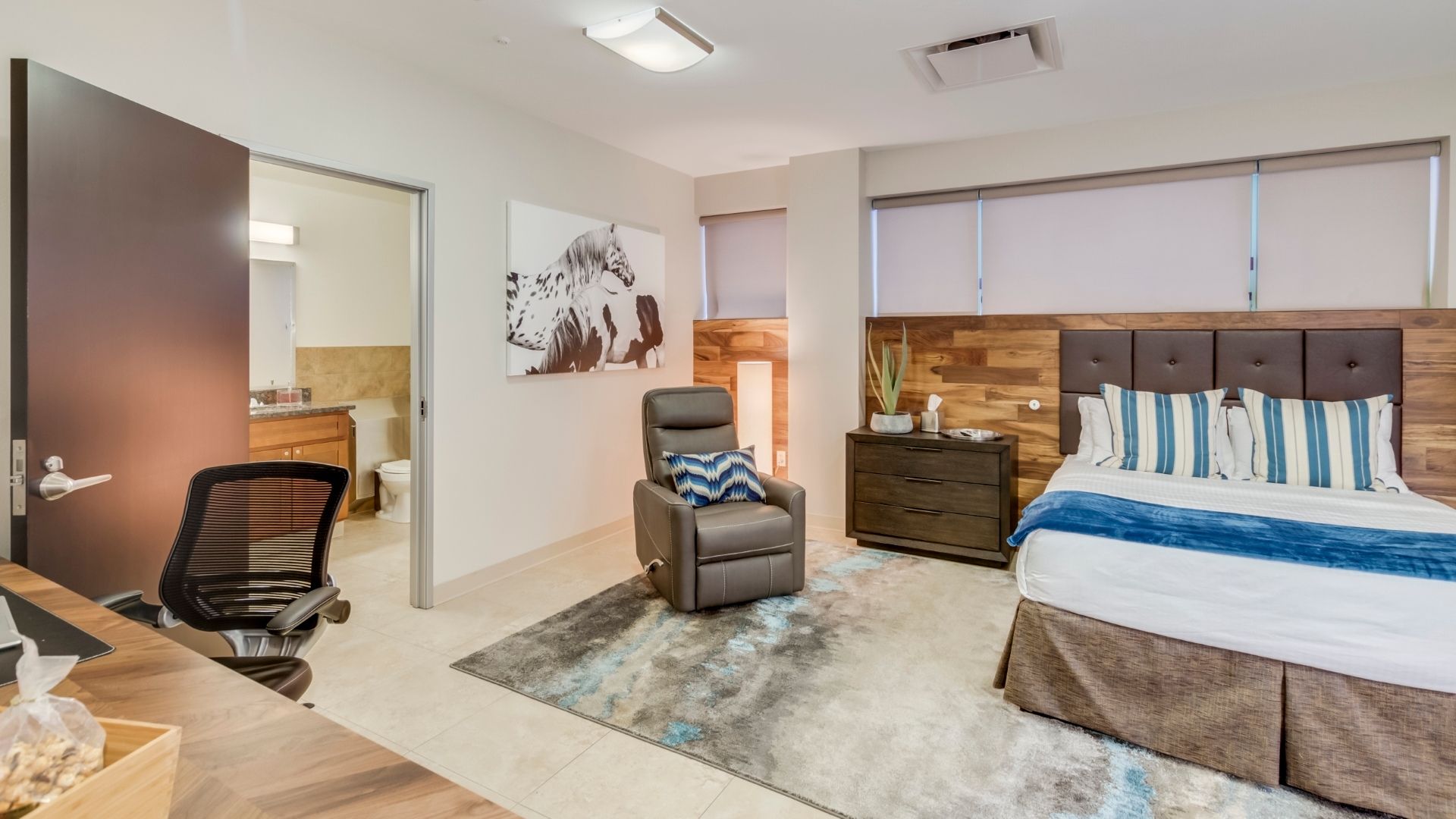

Inside a Boutique Rehab Arizona Experience

Medical Providers:
Dr. Michael Vines, MD
Alex Spritzer, FNP, CARN-AP, PMHNP
Clinical Providers:
Natalie Foster, LPC-S, MS
Last Updated: July 29, 2026

There’s a moment that surprises many people when they arrive at a boutique treatment center.

It isn’t the architecture. It isn’t the private suite or the quiet grounds.

It’s the absence of chaos.

Nobody is rushing from one appointment to another. The lobby isn’t crowded. You aren’t handed a clipboard and asked to wait behind a dozen other admissions. Instead, someone greets you by name, sits down, and starts a conversation instead of an intake script.

That first impression says a lot about what comes next.

A boutique rehab Arizona program isn’t simply a smaller version of a traditional rehab. The entire experience is built differently. Fewer residents mean fewer distractions, more individual attention, and enough flexibility for treatment to adapt as someone begins to recover instead of forcing everyone through the same routine.

For people who’ve spent years managing businesses, raising families, or carrying responsibilities that rarely slow down, that difference can feel surprisingly unfamiliar—in the best possible way.


Our Addiction Treatment Centers

Experience treatment without the crowds. Talk with our admissions team.

Why Are More People Choosing Boutique Rehab?

Not everyone wants to recover in a place that feels like an institution.

That’s one reason private boutique rehabs continue to attract people looking for a different experience. Smaller programs usually accept only a limited number of residents at one time. That decision affects nearly everything—from how often you meet with your therapist to whether staff notices when you’ve had a difficult morning.

It’s hard to disappear when the team genuinely knows you.

That matters because addiction rarely unfolds the same way twice. One person may be working through years of alcohol dependence while another is trying to untangle prescription drug misuse alongside anxiety or depression. A standardized schedule can only go so far.

A boutique setting gives clinicians room to adjust.

One week might call for longer therapy sessions. The next could involve more family work or additional support around trauma. Good treatment evolves instead of staying locked to a calendar.

You’ll often hear people assume boutique means luxurious. Sometimes it does.

Many centers offering luxury rehab in Arizona include chef-prepared meals, thoughtfully designed private rooms, fitness facilities, and peaceful outdoor spaces. Those amenities aren’t the treatment itself. They simply remove distractions that can make it harder to focus during one of the most demanding periods of a person’s life.

Comfort isn’t the goal.

Being fully present is.

Who Benefits Most From Boutique Addiction Treatment?

Spend enough time talking with admissions teams, and one pattern becomes obvious.

Many clients aren’t avoiding treatment because they doubt it works. They’re avoiding crowded environments where they worry they’ll lose privacy or feel like another case file.

That’s why boutique rehab for executive clientele has grown steadily over the past several years.

Business owners, physicians, attorneys, public figures, and senior executives often carry responsibilities that don’t disappear overnight. While recovery requires stepping away from daily pressures, many still value discretion and individualized planning. A smaller treatment center is often better equipped to provide both.

The same is true for people facing both substance abuse and mental health issues.

When clinicians have time to notice subtle changes—poor sleep, rising anxiety, emotional withdrawal—they can respond before those struggles grow into setbacks. That level of attention becomes especially valuable for people living with dual diagnosis, where addiction and mental health influence each other every day.

A lower staff-to-client ratio doesn’t guarantee better outcomes by itself.

It simply creates more opportunities for meaningful care.

And sometimes, those extra conversations become the ones people remember long after treatment ends.

Find care that fits you. Let's talk today.

What Should You Expect From a Quality Boutique Program?

The size of a rehab matters far less than what happens inside it.

A beautiful property won’t help much if the clinical care feels generic. The strongest boutique programs pair personalized attention with treatments that have been thoroughly studied, refined, and adjusted over decades.

That usually begins with medical detox when it’s needed.

Withdrawal isn’t just uncomfortable. Depending on the substance involved, it can also carry serious medical risks. Starting treatment under professional supervision allows symptoms to be managed safely while clinicians prepare for the work that follows.

Detox, though, is only the front door.

Real change happens after the body has stabilized.

That’s where evidence-based therapies become the foundation of the entire rehab program. Instead of relying on one counseling method for everyone, therapists draw from approaches that match each person’s needs. Cognitive behavioral therapy, trauma-informed counseling, motivational interviewing, and family therapy often work together rather than in isolation.

A person struggling with workplace burnout may need something different from someone rebuilding life after years of opioid addiction. Good clinicians recognize that early.

You should also expect your treatment plan to change.

That might sound surprising, but recovery rarely moves in a straight line. Some clients make rapid progress and become ready for greater independence sooner than expected. Others discover unresolved trauma only after the first few weeks of sobriety. Treatment shouldn’t stay frozen because a calendar says it’s time to move on.

The best treatment programs leave room for those shifts.

Another sign of quality is how different professionals work together. Physicians, therapists, nurses, case managers, and wellness staff shouldn’t be operating in separate lanes. They should regularly compare notes, discuss progress, and adjust goals as a team.

When that collaboration happens consistently, clients receive care that feels connected instead of fragmented.

Does Luxury Make Recovery Easier?

It’s one of the most common questions people ask.

Some assume luxury treatment is all about high-end amenities. Others dismiss it as unnecessary.

The truth sits somewhere in the middle.

A comfortable environment won’t treat addiction.

It can, however, remove obstacles that make treatment harder.

Think about the difference between trying to process painful emotions in a noisy, crowded building versus sitting somewhere quiet enough to hear your own thoughts. That isn’t about indulgence. It’s about creating conditions where people can remain focused during emotionally demanding work.

That’s one reason luxury addiction treatment Arizona continues to attract people from across the country.

Privacy also plays a role.

Many residents are entering treatment after months—or years—of trying to keep their struggles hidden from coworkers, clients, friends, or even family members. Walking into a calm setting where confidentiality is treated as a priority often lowers the emotional guard people have carried for a long time.

The surroundings matter less than what they make possible.

When someone finally feels safe enough to speak honestly, therapy changes.

That conversation may happen during an individual counseling session. It might happen on a quiet patio after dinner or while walking the grounds with a therapist. Recovery isn’t limited to scheduled appointments. Some of the most meaningful breakthroughs arrive unexpectedly.

A quality private rehab center in Arizona understands that healing happens throughout the day, not just during the hours listed on an itinerary.

Eventually, attention turns toward life outside the facility.

Discharge shouldn’t feel like the finish line. It should feel like the beginning of the next stage.

Strong programs start aftercare planning well before someone packs a suitcase. They look at work responsibilities, family relationships, relapse prevention, housing, community resources, and whether ongoing counseling or support groups would provide additional stability.

Some people transition into intensive outpatient programs, allowing them to continue structured therapy while gradually returning to everyday life.

That continuity often becomes one of the strongest predictors of long-term success.

Recovery isn’t built in a single month.

It’s built through the decisions people keep making after treatment is over.

Recovery doesn't end at discharge. Build a stronger future today.

Can Personalized Care Change the Outcome?

Picture two people beginning treatment on the same day.

One moves through a packed schedule alongside dozens of other residents. The other enters a program where the clinical team has enough time to notice when they’re unusually quiet at breakfast or distracted during group therapy.

Both receive quality care.

Only one is likely to have their treatment adjusted before those small changes become bigger problems.

That’s one of the quiet advantages of boutique addiction treatment.

It isn’t that smaller programs have secret methods. The difference usually comes down to time and attention. Therapists can spend longer exploring what’s happening beneath the surface instead of rushing toward the next appointment. Nurses have more opportunities to check in. Case managers can help solve practical problems before they become reasons to leave treatment early.

Recovery rarely stalls because someone lacks information.

More often, it stalls because they don’t feel seen.

That human connection becomes especially important for people living with mental health conditions alongside addiction. Anxiety, depression, trauma, and chronic stress don’t disappear the day someone stops drinking or using drugs. They often become more noticeable once the substances are gone.

That’s why effective addiction treatment looks beyond sobriety alone.

It asks harder questions.

What happens when work becomes overwhelming again?

How will conflict at home be handled differently?

Which situations are most likely to trigger old habits?

The answers rarely come from a workbook. They develop through honest conversations, repeated practice, and clinicians willing to adjust the plan as new challenges appear.

The strongest programs don’t promise a perfect future.

They help people build one that’s more manageable.

For many residents, that work continues throughout residential treatment, where daily routines slowly begin to replace the unpredictability addiction created. Small habits—sleeping well, eating consistently, showing up for therapy, exercising, reconnecting with family—start to feel normal again.

That change may not seem dramatic from the outside.

From the inside, it can feel life-changing.

Why Hart Rehab Takes a Different Approach

Every treatment center talks about personalized care.

The difference becomes obvious once the schedule begins.

At some facilities, treatment follows the same rhythm for nearly everyone. Therapy happens at the same time, groups follow the same format, and progress is measured against a standard timeline. That structure works for some people. Others need something that bends with them instead of asking them to fit the program.

Hart Rehab was built with that second group in mind.

Someone entering treatment after years of prescription drug use won’t arrive with the same needs as a business owner dealing with burnout and heavy alcohol use. A young adult rebuilding family relationships faces different challenges from someone who’s spent decades hiding an addiction behind a successful career. Trying to treat those stories the same way rarely makes sense.

That’s why the clinical team starts by understanding the person before building the plan.

For some, the first priority is medical detox. Others begin with therapy because withdrawal has already passed but unresolved trauma, anxiety, or other emotional struggles remain front and center. As treatment unfolds, those priorities can shift. Progress isn’t always linear, and neither is good clinical care.

The therapies remain evidence-based, but they’re applied thoughtfully rather than mechanically. A plan that’s working continues. One that isn’t gets adjusted.

Recovery also happens outside the therapy room.

It shows up over breakfast conversations that feel easier than they did a week ago. It appears when someone joins a group discussion instead of sitting quietly at the edge of the room. Sometimes it’s as simple as sleeping through the night for the first time in months.

Those moments don’t usually make it into brochures.

They’re often the signs that someone is beginning to trust the process.

For anyone looking for a boutique rehab Arizona program, those everyday moments matter just as much as the treatment schedule itself. They’re what turn a stay at a facility into the beginning of a life that feels steady again.

Take the first step today. We're ready when you are.