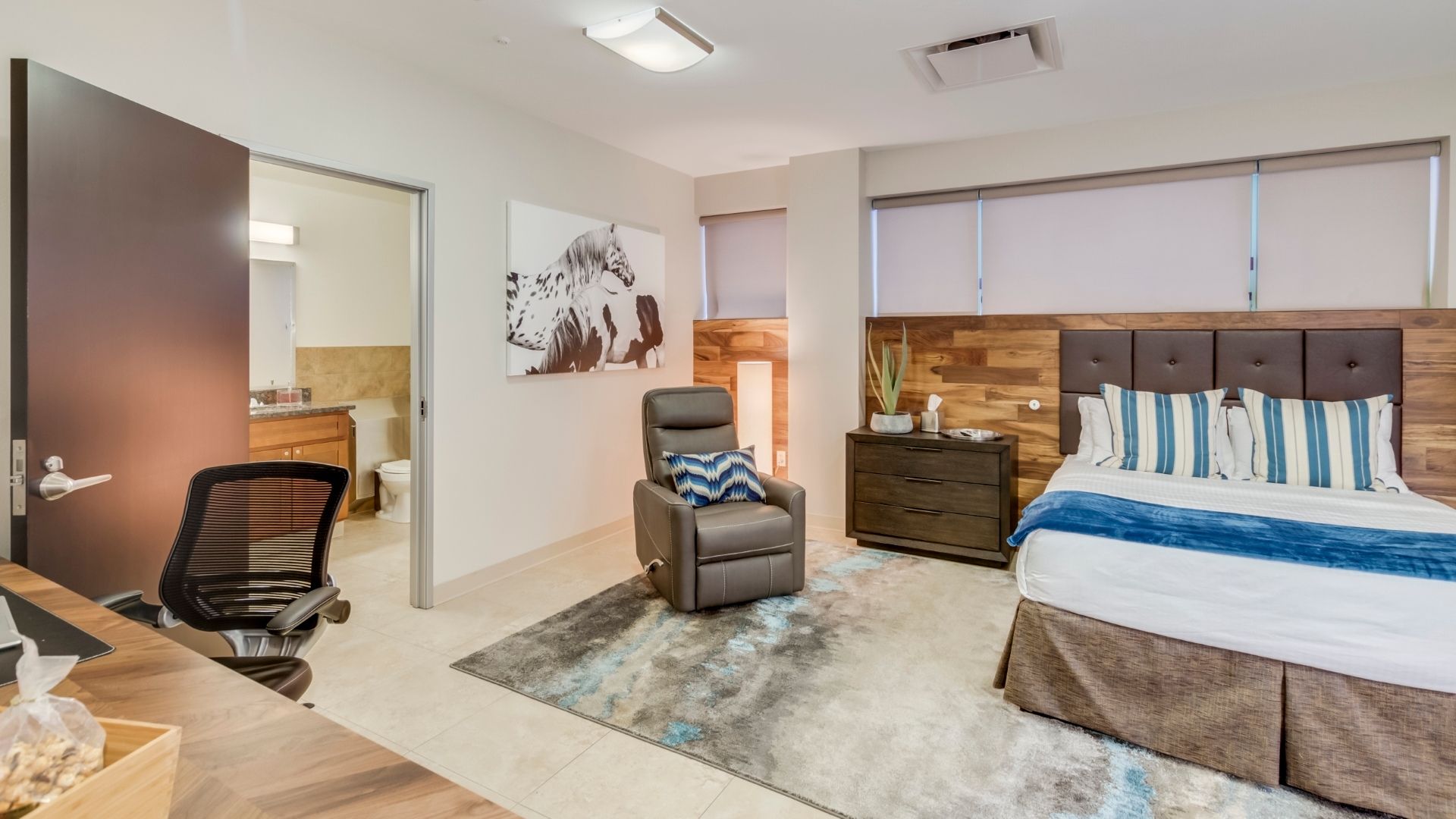
What Residential Treatment for Drug Addiction Looks Like

Medical Providers:
Dr. Michael Vines, MD
Alex Spritzer, FNP, CARN-AP, PMHNP
Clinical Providers:
Natalie Foster, LPC-S, MS
Last Updated: August 10, 2026

There’s a specific kind of exhaustion that comes right before someone finally decides to get help. Not always a dramatic rock-bottom moment — sometimes it’s just waking up tired of the same fight, again. That’s usually when people start looking into residential treatment for drug addiction, and honestly, that first search is often the hardest part.


Our Addiction Treatment Centers

Ready to take the first step? You don't have to do this alone.

What Does Residential Treatment for Drug Addiction Actually Involve?

Residential treatment means living at a facility full-time while you work through addiction treatment. No commute. No juggling work calls between sessions. No going home at night to the same fridge, the same couch, the same people who were around when things fell apart.

A typical residential drug rehab program puts medical support and daily counseling under one roof. Staff keep an eye on physical health early on, when withdrawal symptoms are still a real risk, then the focus gradually shifts toward the psychological work — the part that actually makes recovery hold.

Why does removing someone from their environment matter so much? Because willpower alone rarely beats a familiar trigger. When drug or alcohol use has already cost someone their job, their marriage, or their health, stepping away completely tends to work better than trying to heal in the same place it all fell apart.

How Is a Residential Drug Rehab Program Structured Day to Day?

Days follow a routine, and that routine does more work than people expect. Wake up, eat, go to group, break, individual session, free time, lights out. Addiction tends to thrive in chaos. Rebuilding a predictable rhythm, oddly enough, is part of what helps rewire old habits.

Group therapy usually happens daily. It’s not just a talk circle — clients practice actual coping skills and relapse prevention strategies they’ll need once they leave. One-on-one sessions dig into what’s underneath the addiction, whether that’s old trauma, family history, or an untreated mental health condition nobody caught before.

Clients often worry about how work and treatment plan obligations will collide. Fair question. Most residential settings build in time to plan for that reentry before discharge day even arrives, so going back to a job or classes doesn’t feel like starting from zero.

Structure changes everything. Start building yours today.

What's the Difference Between Long Term and Short Term Residential Rehab?

Short-term programs usually run 28 to 30 days. They’re intensive, and for a lot of people, they work well as a first step right after detox. Long-term residential drug rehab stretches further, often 60 days to a year, depending on how deep the addiction goes and how someone’s responding to early treatment. Some clients move between the two — starting in a shorter drug abuse residential rehab stay before transitioning into something longer if they need it.

The benefits of long-term care tend to show up in the slower stuff. Rebuilding life skills. Practicing sobriety somewhere low-risk before facing the outside world again. A short stay can jumpstart recovery just fine, but long-term inpatient care usually produces sturdier results for people who’ve been struggling for years, not months.

Neither option wins across the board. Someone with a shorter history and solid support at home might genuinely do fine in 30 days. Someone who’s relapsed before, or who’s managing a dual diagnosis, usually needs the extra runway that longer residential treatment programs provide.

What Happens During Residential Drug Abuse Treatment for Mental Health Needs?

Addiction rarely shows up alone. Anxiety, depression, PTSD — one of these is usually sitting quietly underneath the substance use. Treat the addiction and ignore that, and it tends not to hold. So most residential drug abuse treatment programs now screen for co-occurring disorders right at intake, before treatment even really begins.

If a dual diagnosis turns up, the plan shifts. Psychiatric care and medication management get built into the daily schedule right alongside standard addiction treatment, not tacked on as an afterthought. Programs that handle substance use and mental health together, rather than one after the other, tend to see fewer relapses down the line — which makes sense, honestly. The two were never really separate problems to begin with.

You don't have to face this alone. Real support is one call away.

What Are the Benefits of Long Term Residential Rehab?

Time is the biggest advantage, plain and simple. Addiction doesn’t build overnight, so why would anyone expect it to unwind that fast either? Long-term residential rehab gives the body room to physically recover from substance abuse, and it gives someone space to actually practice new coping strategies instead of just hearing about them in a session.

Distance helps too. Months in a residential setting, instead of weeks, means far fewer chances for an early relapse during the most fragile stretch of recovery. Clients tend to describe it as the gap between understanding recovery in theory and actually living inside it, day after day, until it starts to feel normal.

There’s also the step-down piece. Long-term inpatient treatment often includes phases where clients gradually earn more independence as discharge gets closer. Small stuff, at first — more unsupervised time, a day pass, a weekend home — but it softens the jump back into work, family, and the rest of everyday life.

How Do You Choose the Right Residential Treatment Program?

Start with what a program actually treats. Some facilities focus narrowly on substance use. Others build in mental health care from day one, which matters if anxiety, depression, or old trauma is part of the picture too. A place that stays involved after residential care ends, not just during it, usually serves people better in the long run.

Then there’s the setting itself. Some people thrive in a small, quiet treatment center. Others want a bigger campus with more peer energy around them. Either way, it’s worth asking about staff credentials, what therapy approaches they actually use, how much family gets involved, and what aftercare looks like once discharge day comes.

Hart Rehab builds treatment plans around the person, not a fixed schedule everyone gets slotted into. Clients can choose between short-term and long-term residential options, with group therapy, individual counseling, and coordinated mental health support woven in from the start. Recovery doesn’t look the same for any two people — Hart Rehab tends to treat that as the starting point, not an afterthought.

If you’re ready to look into residential treatment for drug addiction, reaching out is really the whole first step. Hart Rehab’s team can talk you through options, insurance, and what admission actually looks like. No pressure. Just answers.

Take that first step today. Hart Rehab is ready when you are.