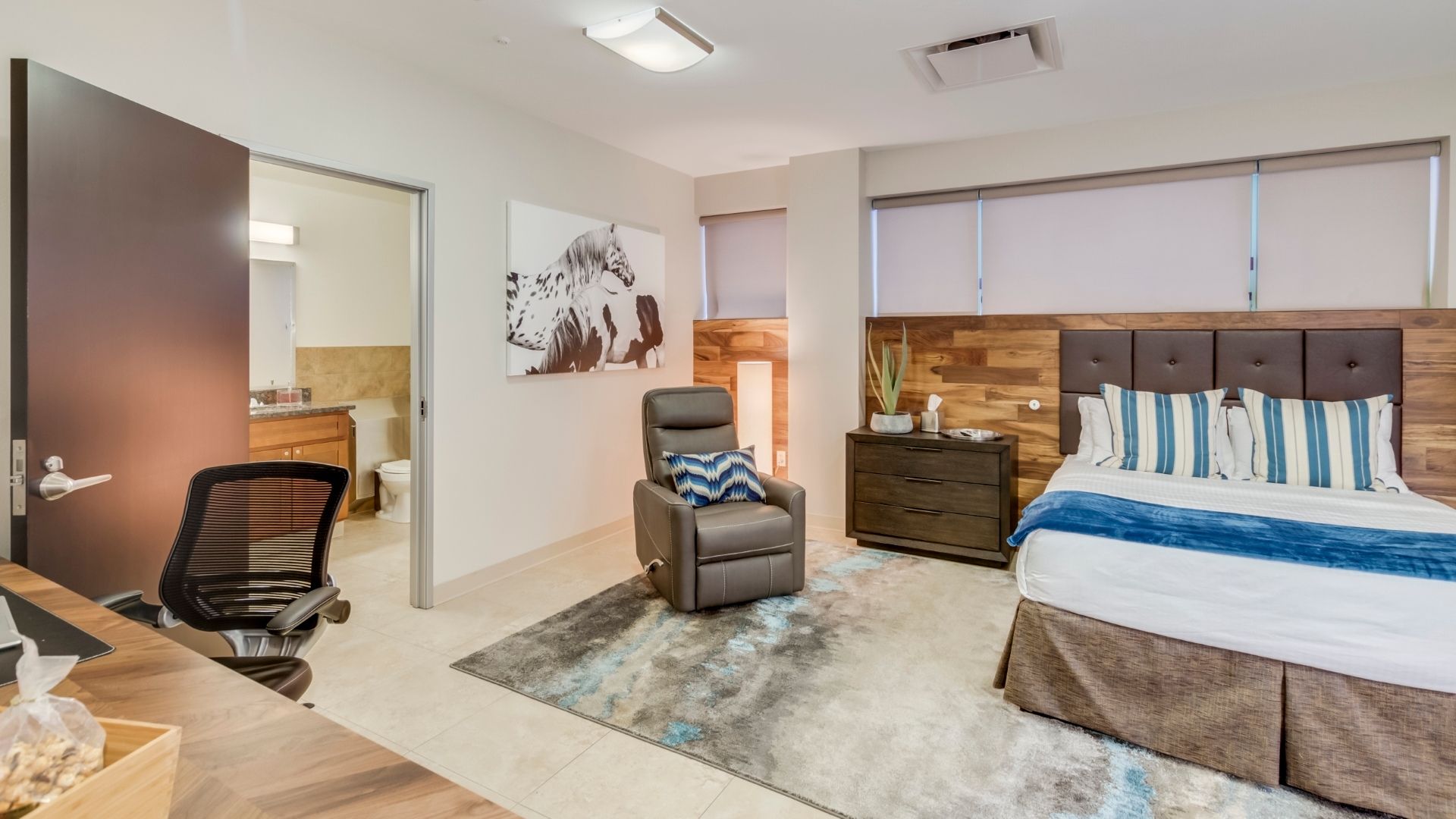
Inside a High-End Rehabilitation Center for Recovery

Medical Providers:
Dr. Michael Vines, MD
Alex Spritzer, FNP, CARN-AP, PMHNP
Clinical Providers:
Natalie Foster, LPC-S, MS
Last Updated: August 5, 2026

Picture two versions of rehab. One has fluorescent lights, a shared room, and a cafeteria tray. The other has ocean views, a private chef, and a clinician who actually remembers your name by day three. The gap between those two pictures is exactly what a high-end rehabilitation center is built to close.


Our Addiction Treatment Centers

Ready to explore your options? Speak with our admissions team today.

What Is Luxury Rehab, Exactly?

The term gets thrown around loosely, so it helps to define it. What is luxury rehab? At its core, it’s an addiction treatment center that pairs evidence-based therapies with the kind of setting, staffing, and amenities you’d expect from a five-star property. Private rooms instead of dorm-style housing. Chef-prepared meals built around nutrition science. A physical space — often a converted estate or a coastal retreat — that doesn’t feel remotely institutional.

But “luxury” isn’t only about scenery. It also points to something structural: lower client-to-staff ratios and more one-on-one time with medical professionals. A standard program might have a counselor managing a dozen or more cases at once. A high-end facility often keeps that number in the single digits, and that difference shapes how much attention each person’s recovery process actually gets.

What Makes a High-End Rehabilitation Center Different

Ask an admissions team what separates their high-end rehabilitation center from a standard one, and staffing usually comes up before amenities do. Smaller caseloads mean therapists can adjust treatment plans in real time instead of following a fixed script for everyone in the building.

Individualized care also extends to scheduling. Rather than herding clients through identical daily blocks, many high-end programs build schedules around each person’s history, triggers, and goals. Someone working through trauma might spend more time in EMDR sessions. Someone managing chronic pain alongside substance use disorders might get additional medical oversight built into their week.

Why Private Rooms Change the Recovery Experience

It’s tempting to write off rehab with private rooms as a simple perk. Clinicians who work in this space tend to disagree. Early recovery is exhausting — withdrawal, disrupted sleep, raw emotional work in therapy sessions. Having a private space to process all of that, rather than sharing a room with a stranger going through the same intensity, changes how well someone tolerates those first difficult weeks.

Privacy matters for a second reason, too: discretion. Executives, physicians, and public figures often need confidentiality just as much as clinical support. Facilities built around luxury residential rehab tend to have that baked in, from private entrances to strict staff confidentiality agreements.

Privacy matters in recovery. Ask about our private accommodations now.

Inside a Resort-Style Rehab Schedule

Ask why the phrase “resort style rehab” fits so well, and the answer isn’t the pool. It’s the underlying idea — treating mind, body, and spirit as one connected system instead of isolating “the addiction” as a problem to fix in a vacuum.

A typical week might include:

  • Evidence-based therapies, including cognitive behavioral therapy, dialectical behavior therapy, and trauma-informed approaches like EMDR
  • Holistic therapies such as acupuncture, massage, yoga, and meditation, aimed at calming the nervous system alongside the mind
  • Fitness facilities and structured movement, from personal training to guided hikes
  • Recreational activities like equine therapy, art studios, or culinary classes, meant to rebuild identity outside of substance use
  • Nutritional counseling, since long-term substance use often depletes the body in ways that affect mood and focus

None of this is indulgence for its own sake. The goal is to reduce stress enough that the harder clinical work has room to happen. Someone constantly overwhelmed by their surroundings has less capacity to sit with difficult material in therapy. Clear the noise, and there’s more bandwidth left for the actual work.

The Clinical Backbone Behind the Comfort

Comfort alone doesn’t treat substance use disorders. Reputable high-end rehab still builds its rehab programs around the same clinical foundation used in any accredited addiction treatment center — just with more time and attention per person.

That typically includes medically supervised detox, since withdrawal from substances like alcohol or benzodiazepines can be dangerous without physician oversight. Dual-diagnosis treatment matters too, given how many people with substance use disorders also live with depression, anxiety, or PTSD. Individual and group therapy sessions form the daily backbone, often supported by family therapy to repair strained relationships. Where clinically appropriate, medication-assisted treatment is managed by medical professionals rather than left to guesswork.

Long term recovery isn’t decided by the intensity of the first thirty days. It’s shaped by what comes after. Strong programs build in step-down care — sober living referrals, ongoing outpatient therapy, alumni support — so the transition back to daily life doesn’t unravel the progress made inside.

Real care needs real structure. Talk to a clinician about your options.

Who Tends to Choose Luxury Residential Rehab

Cost is the obvious dividing line. Luxury programs can run well beyond what standard insurance covers, sometimes into five figures a month. That price naturally shapes who walks through the door — professionals who need discretion while they’re away from work, families with the resources to prioritize comprehensive care, or people who’ve tried more conventional treatment and are looking for a different level of support.

It would be a mistake, though, to assume the appeal is purely status. For a lot of people, the setting is instrumental, not incidental. Recovery asks someone to sit with discomfort they’ve spent years avoiding. A space that feels safe and even restorative can lower the barrier to doing that work honestly, rather than performing it for an audience of roommates and staff.

What to Ask Before You Choose a Center

Not every facility marketed as luxury delivers on the clinical side of that promise. Before enrolling, ask pointed questions. What are the credentials of the therapists and medical professionals on staff? What’s the actual staff-to-client ratio, not just the number listed in a brochure? Is the facility accredited by an organization like the Joint Commission or CARF? What does aftercare look like once the residential stay ends?

Touring in person helps. So does speaking directly with clinical staff rather than only the admissions team, and asking for outcome data if the facility tracks it. A beautiful building and a thoughtful wellness menu matter, but they’re not a substitute for licensed clinicians and a program grounded in evidence.

Finding the Right Fit at Hart Rehab

At Hart Rehab, that clinical foundation isn’t an afterthought bolted onto a nice property — it’s the starting point. Every rehab offering here begins with a licensed medical team, individualized treatment planning, and evidence-based therapies delivered in a setting designed to lower stress rather than add to it.

Private rooms, a full fitness center, and holistic therapies all support one goal: giving people the space to actually engage with their recovery process instead of surviving it. Our admissions team works with each person to build a plan around their specific history, not a template built for the average client. And because long term recovery depends on what happens after residential care ends, Hart Rehab builds structured aftercare into every plan from day one.

If you’re comparing options for yourself or someone you love, the difference between a high-end rehabilitation center that delivers and one that just looks the part usually comes down to exactly these details.

Your recovery deserves real support. Contact Hart Rehab's admissions team today.