Choosing to enter treatment is a big decision. Worrying about rehab cost and payment options can make that decision feel even harder. You might wonder what insurance will cover, what you will have to pay out of pocket, and whether there are realistic options if you do not have insurance at all.
This guide walks you through how rehab costs work, what typical payment paths look like, and how you can approach admissions and insurance in a calm, informed way. The goal is to give you enough clarity that money becomes a planning question, not a barrier to getting help.
Understanding what affects rehab cost
Rehab is not one single product with one price. Your total cost depends on several variables that you can usually control or at least understand before you commit.
Level of care
Generally, more intensive levels of care cost more because they include lodging, meals, and round-the-clock staff.
- Inpatient and residential rehab: You live at the facility, receive 24/7 support, and participate in daily groups and individual counseling. These programs usually cost more than outpatient because they bundle housing, meals, and constant supervision into the fee. In Mississippi, for example, inpatient treatment costs are higher than outpatient for this reason [1].
- Outpatient rehab: You live at home and attend treatment during the day or evening. Partial Hospitalization Programs (PHPs) and Intensive Outpatient Programs (IOPs) provide many hours of care per week and cost more than weekly outpatient sessions but less than full residential stays [2].
Length of stay
Your length of stay has a direct impact on overall rehab cost. A 30 day inpatient program will almost always cost less than a 90 day stay at the same facility. Residential programs can range from a few weeks to many months depending on your needs and your response to treatment [3].
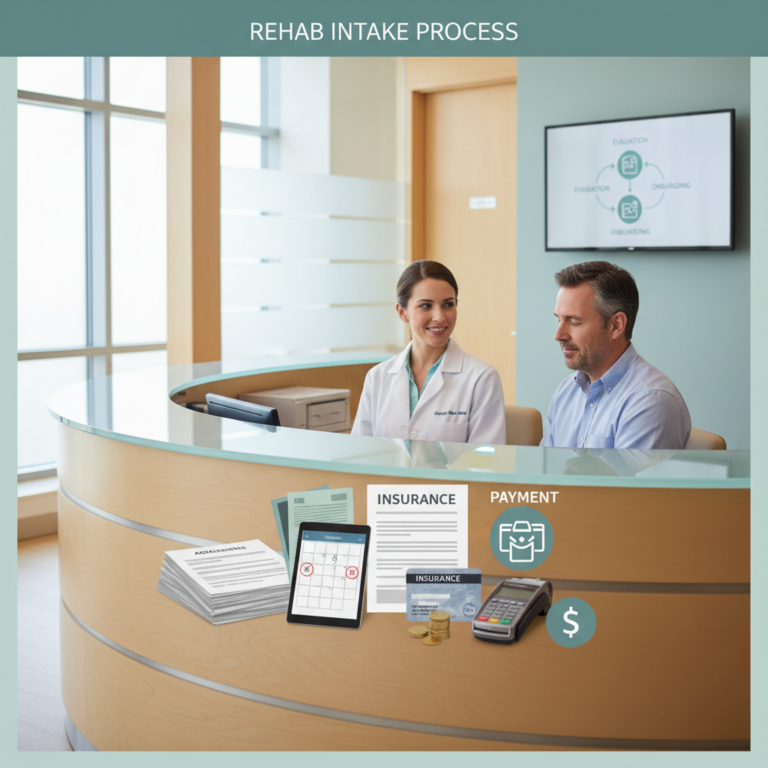
If you are concerned about budget, ask during the rehab intake process how the team approaches recommended length of stay and what options exist if your insurance will only approve a certain number of days.
Type of facility and amenities
You will see a wide range of pricing between basic, state-funded programs and private, resort-style facilities.
- Public or state-funded programs typically offer shared rooms, limited amenities, and a more clinical environment but can be free or low cost for eligible patients [4].
- A private rehab facility may offer private rooms, gourmet meals, fitness or spa services, and more amenities. These services help create comfort and privacy, especially if you want a quiet space to recover, but they increase daily cost.
There is no single right choice. You can still receive high quality, evidence-based care in a modest setting. What matters most is clinical quality, safety, and whether the program fits your needs and budget.
Location and local market
Rehab pricing varies widely by state. Residential treatment is less expensive in some regions and considerably higher in others [3]. Local cost of living, staffing costs, and demand all play a role.
If cost is a major concern and you are able to travel, you might ask whether facilities in neighboring areas offer more affordable daily rates or better in-network coverage with your insurance.
How insurance typically covers rehab
For most people, health insurance is the primary way to manage rehab cost and payment options. Understanding your benefits can dramatically reduce what you actually pay.
Rehab as an essential health benefit
Today, substance use treatment is not treated as an optional add-on in many health plans. Under the Affordable Care Act, new small group and individual plans must cover substance use disorder services at a level similar to general medical and surgical care [5]. The Mental Health Parity and Addiction Equity Act supports this by requiring comparable coverage for mental health and addiction in many plans [1].
This means your plan is likely required to cover at least some portion of:
- Medical detox when medically necessary
- Inpatient or residential rehab
- Partial hospitalization and intensive outpatient programs
- Standard outpatient counseling or therapy
Coverage details differ by plan, but it is very rare for a modern plan to refuse all addiction treatment.
Types of health plans and what they mean
Your plan type shapes where you can go and what you will pay.
- HMO (Health Maintenance Organization): Often requires you to use in-network providers and get referrals for specialty care, including rehab. Out-of-network care may not be covered except in emergencies [6].
- PPO (Preferred Provider Organization): Usually offers more flexibility to see both in-network and out-of-network providers. In-network care generally has lower copays and coinsurance, but you may be able to attend a preferred rehab that is out of network at a higher cost.
- POS (Point of Service): Combines features of HMO and PPO. You may need a primary care provider referral, and you generally pay less for in-network treatment [6].
Private insurers that frequently cover rehab include Blue Cross Blue Shield, Aetna, Cigna, Humana, UnitedHealthcare, and others, and TRICARE offers coverage for veterans [5].
Public programs also help:
- Medicare: Parts A and B can cover hospitalization and outpatient addiction treatment. Part D may cover certain addiction-related medications [5].
- Medicaid: Often covers inpatient and outpatient addiction services with minimal or no copays, although acceptance of Medicaid varies by facility and by state [5].
Verifying your benefits before admission
Before you commit to a program, you can reduce surprises by verifying your benefits in advance. Many treatment centers have admissions or insurance teams who will:
- Contact your insurer
- Confirm in-network status
- Check what levels of care are covered
- Estimate your deductible, copays, and coinsurance
- Clarify any preauthorization requirements [6]
You can also use an online form to verify insurance for treatment if the facility offers one. This short step can help you compare options, plan for your portion of the bill, and focus on clinical fit instead of only cost.
If you want to quickly see whether a facility even accepts your plan, a page that outlines insurance accepted rehab can provide an overview before you speak with admissions.
Out-of-pocket costs you should expect
Even with solid coverage, there are usually some out-of-pocket expenses. Understanding these ahead of time allows you to budget realistically.
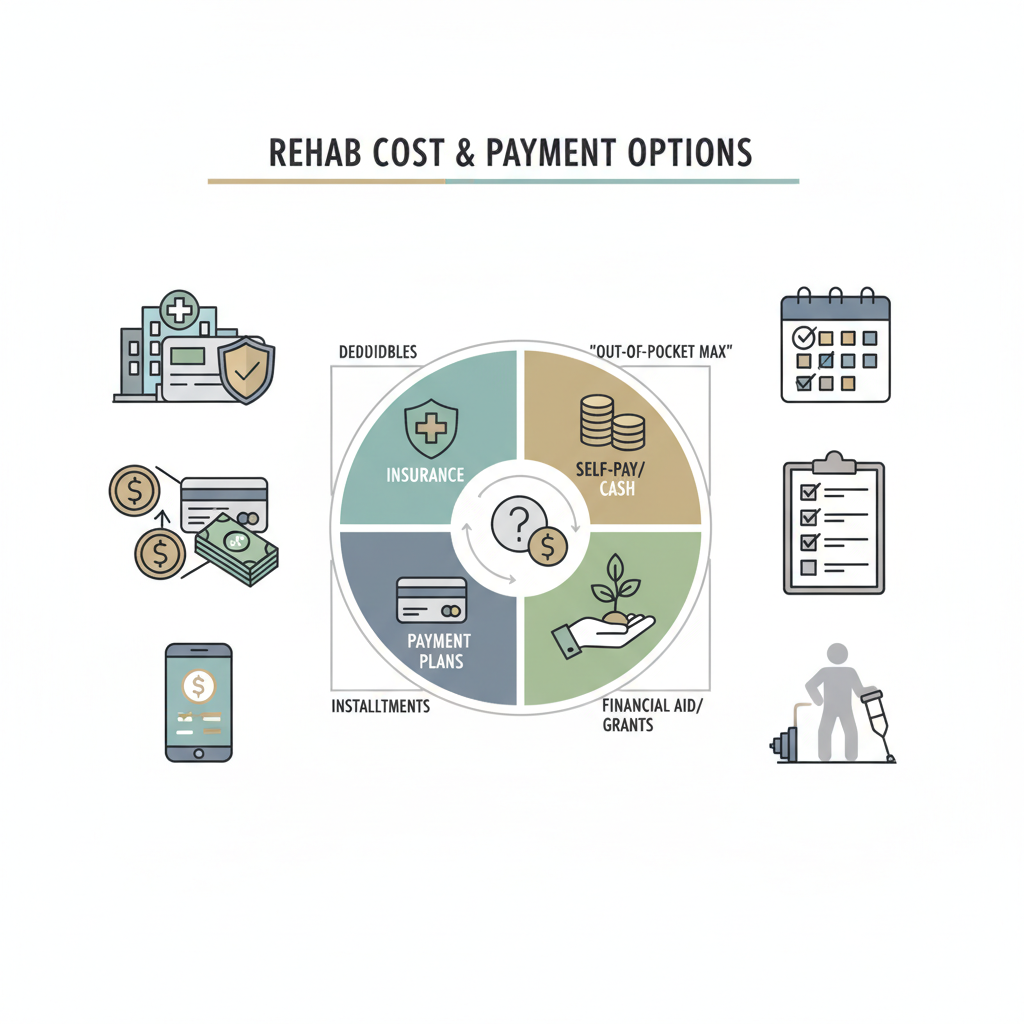
Deductibles, copays, and coinsurance
You will likely encounter some combination of:
- Deductible: The amount you pay yourself each year before your insurance starts covering services.
- Copay: A fixed dollar amount you pay for a specific service or visit, such as a therapy session.
- Coinsurance: A percentage of the allowed charge that you are responsible for paying.
For inpatient rehab, insurance may cover a large percentage of the daily rate, but you might still have coinsurance or a per-day copay. Outpatient visits often use copays instead of daily rates. Many plans use coinsurance for inpatient care and copays for outpatient programs [1].
Non-covered or limited services
Insurance typically focuses on what is considered medically necessary. You may pay more for:
- Luxury amenities
- Private chef or high-end dining
- Spa or recreational services
- Extra nights that are not authorized by your insurer
Even though these services can improve comfort and privacy, they may not be reimbursable. Your admissions team should be transparent about what is billable to insurance and what is not.
Medications and ongoing care
If you receive medication-assisted treatment, you may have separate pharmacy charges. FDA approved medications such as methadone, buprenorphine, and naltrexone for opioid use disorder or naltrexone, acamprosate, and disulfiram for alcohol use disorder all come with different price points, and coverage will vary by plan [2].
It also helps to budget for follow-up:
- Continuing therapy or IOP after inpatient care
- Psychiatry visits for co-occurring mental health conditions
- Supportive services like recovery coaching or peer support
Ask your admissions team how they structure step down care so you can account for both the initial stay and aftercare.
Payment options if you are underinsured or uninsured
If you do not have strong insurance benefits, you still have options. It may take more phone calls and planning, but many people in your situation receive treatment every year.
State-funded and public programs
State-funded rehabs can be an essential safety net. These programs are often free or low cost and provide a range of services:
- Detoxification
- Residential or inpatient care
- Outpatient and intensive outpatient services
In publicly funded centers, most admissions are for outpatient services, with detox and residential making up the remainder [4]. Because these programs are in high demand, you may encounter waiting lists or eligibility requirements based on income, diagnosis, or legal status.
Federal programs and grants also help fund access. Medicare, Medicaid, Veterans Affairs, and Affordable Care Act provisions support coverage for many people who otherwise could not afford treatment [4].
Sliding scale and nonprofit options
Some facilities use sliding fee scales, adjusting costs based on your income. Nonprofit providers may have grant funding that allows them to offer reduced-cost or no-cost services for certain groups, such as:
- Pregnant women
- People without any insurance
- Individuals at high risk for HIV/AIDS [4]
Community resources can help you find these programs. For example, Dallas County maintains a searchable tool for finding drug and alcohol rehabs based on treatment types, payment options, and special populations, and many nonprofits in that area provide detox, residential, outpatient, housing, and medication-assisted treatment for people with limited finances [7].
Wherever you live, your local health department or behavioral health authority may maintain similar directories.
SAMHSA’s National Helpline
If you are not sure where to start, SAMHSA’s National Helpline is a 24/7, confidential resource you can call. The staff will not provide counseling, but they will:
- Refer you to local treatment facilities
- Help you find programs that accept Medicare or Medicaid
- Point you toward centers that use sliding fee scales
- Connect you with state offices that manage publicly funded treatment for people who are uninsured or underinsured [8]
This is a practical first step if you are feeling overwhelmed by options or worried that cost will keep you from care.
Loans, credit, and financing
You may decide that a particular program is the best clinical fit and want to explore ways to close the financial gap. Common strategies include:
- Personal or bank loans
- Specialized medical or rehab financing programs
- Credit cards used deliberately with a payback plan
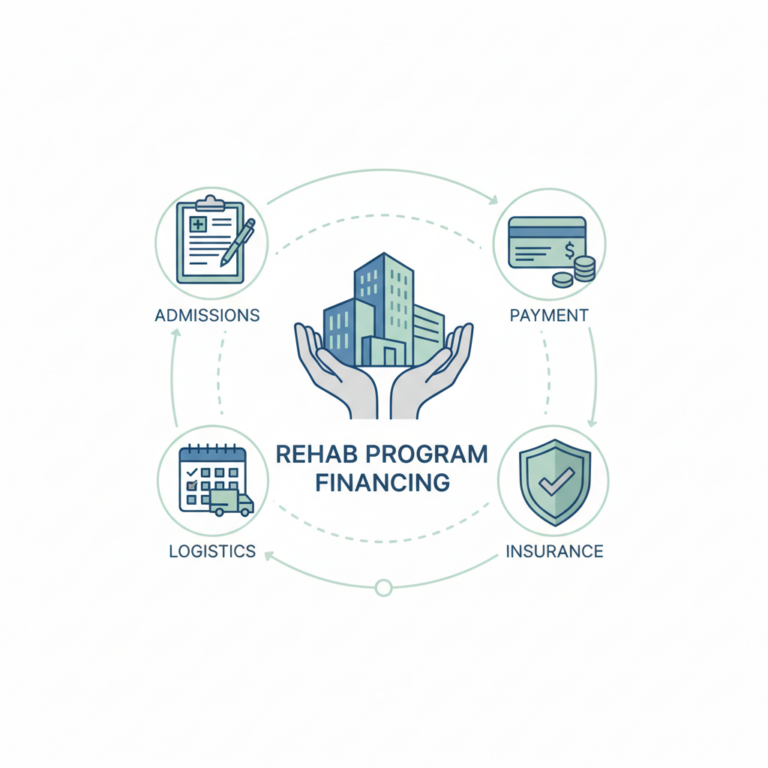
Facilities that offer financing rehab programs can walk you through these options. Some programs also provide income based scholarships or payment plans to spread costs over time [1].
Before you use credit, ask the admissions team for a clear, written estimate and be honest about what you can realistically repay.
Making admissions and cost conversations easier
Cost and logistics can feel intimidating when you are already under strain. You can make the process more manageable by approaching admissions in a structured way.
Prepare for the admissions call
When you reach out to learn about admissions for rehab, it helps to have certain information in front of you. This makes it easier for staff to give you specific answers about rehab cost and payment options.
Useful details include:
- Your insurance card and ID number
- Your prescription list
- Any recent hospital or detox stays
- Your preferred timeframe for admission
- Questions about room types, such as whether private rooms are available
Admissions staff are used to talking about both clinical needs and finances. It is appropriate to ask about everything from program structure to how billing works.
Ask for cost transparency
Clear information is your best tool. As you speak with prospective programs, you might ask:
- Are you in network with my plan?
- Can you provide an estimated range for my out-of-pocket costs?
- What is included in your daily or program rate?
- Are private rooms available and what is the additional cost?
- What happens if my insurer approves fewer days than you recommend clinically?
- Do you offer payment plans or financial assistance?
Facilities that value transparency will explain their pricing and policies in plain language. If something sounds unclear, ask the staff to restate it or send it in writing.
You have a right to understand both your treatment plan and the financial commitment before you say yes to admission.
Consider touring or meeting the team
If you are able, seeing a facility in person or virtually can help you decide whether the environment, privacy level, and amenities match the cost. Many centers allow you to tour residential rehab before admission or arrange virtual walk-throughs.
During a tour, you can:
- Look at room options, including private or semi-private suites
- Get a feel for group spaces, dining areas, and outdoor areas
- Ask day to day questions about schedules and expectations
- Meet key staff members and gauge the overall tone of the program
This context helps you and your family decide whether the investment feels right for your situation.
Balancing cost with quality and fit
Because rehab cost and payment options vary so widely, it can be tempting to focus purely on price. Cost matters, but you also want to consider what you are actually getting for your investment.
Clinical quality and services
When you compare programs, look at:
- Accreditation and licensing
- Medical supervision for withdrawal and co-occurring conditions
- Use of evidence-based therapies such as cognitive behavioral therapy, motivational interviewing, and medication assisted treatment
- Availability of specialized tracks for trauma, mental health, or specific populations
The average cost of drug rehabilitation in the United States is significant, roughly five figures per person in some studies, and treatment costs can range from a few hundred dollars to the price of a car or more depending on intensity and amenities [9]. With that level of spending, it is reasonable to expect a program that follows current best practices, not just a bed and a schedule.
Environment and privacy
If privacy and rest are priorities for you, it is appropriate to ask about:
- Room types, including the possibility of private rooms
- Visitor policies and discretion
- Group sizes and staff to client ratios
A comfortable environment does not replace clinical quality, but it can support your ability to participate fully in treatment. For many people, a quieter, more private setting is worth some additional cost, especially at the beginning of recovery.
Long term value
Addiction touches work, relationships, physical health, and finances. Untreated substance use can result in ongoing medical bills, legal issues, and lost income. While no program can guarantee specific outcomes, you can think about rehab as an investment in your long term wellbeing.
To gain perspective, you might ask:
- What kind of aftercare or alumni support is included?
- How does the program involve family or significant others?
- What is your approach if someone relapses after discharge?
The more support and structure that exists after you leave, the more likely your initial investment will support sustainable change.
Taking your next step
You do not need to have every dollar accounted for before you ask for help. Your role is to be honest about your situation and your needs. The admissions and insurance teams you speak with can help you:
- Clarify what your insurance covers
- Estimate out-of-pocket rehab cost and payment options
- Explore public programs, financing, or scholarships if necessary
- Choose the level of care and environment that fits your life
If you are ready to talk through specifics, you can start by reviewing insurance coverage for treatment and using tools to verify insurance for treatment. From there, connecting with an admissions specialist about the rehab intake process can turn a stressful unknown into a clear, step-by-step plan.
Cost is part of the decision, but it does not have to be the obstacle that keeps you or someone you love from entering recovery. With accurate information and the right support, you can find a path that makes both clinical and financial sense.