
Understanding admissions for rehab
When you start looking into admissions for rehab, you are usually balancing several urgent questions at once. You want to know how quickly you can get in, what it will cost, what your insurance will cover, and what the actual process looks like from the first call to the day you arrive.
Across the United States, significant public and private resources are invested in making treatment accessible. The Substance Abuse and Mental Health Services Administration (SAMHSA) distributes hundreds of millions of dollars in block grants to support community mental health and substance use treatment, including rehab admissions throughout the country [1]. This broader system can work in your favor, especially when you understand how admissions, insurance, and financial help fit together.
This guide walks you step by step through what to expect, how to plan financially, and how to move quickly from “thinking about treatment” to actually starting a program that fits your needs and budget.
How the rehab admissions process works
The admissions process is designed to do two things at the same time. It must keep you safe medically and it must match you to the right level of care. Understanding each step can reduce anxiety and help you prepare.
First contact and basic screening
Admissions for rehab typically begin with a phone call or an online form. During that first conversation, admissions staff usually ask for:
- Basic personal details
- Substance use history
- Any current withdrawal symptoms
- Mental and physical health conditions
- Prior treatment attempts
- Your insurance information or how you plan to pay
This early screening helps determine whether the facility is an appropriate fit and how urgent your situation is. Centers such as Lifetime Recovery Center describe this as the first phase of their process, where staff gather key information and begin to discuss coverage and costs with you [2].
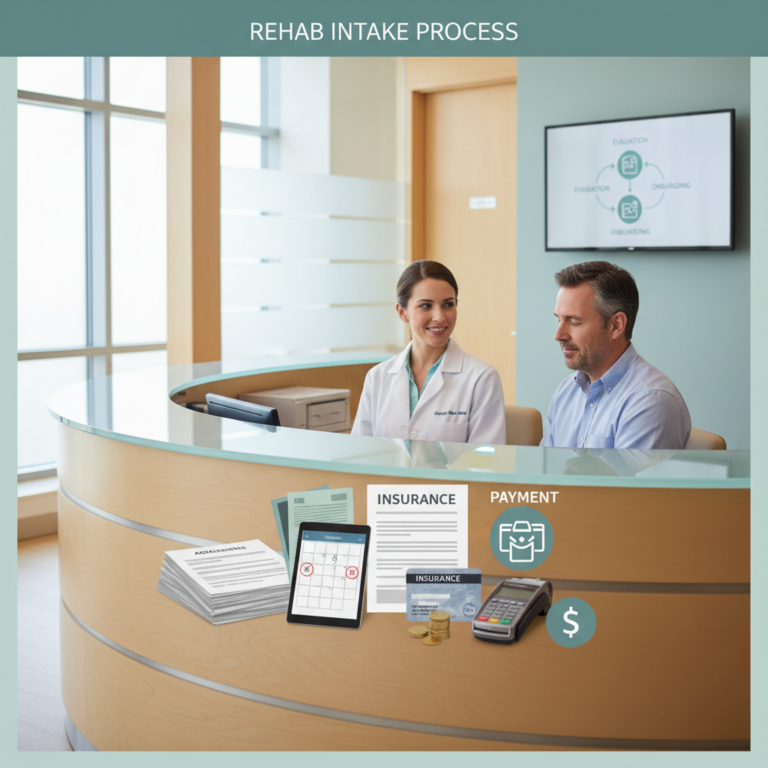
If you want a deeper look at this early phase, you can review our dedicated overview of the rehab intake process.
Clinical pre‑assessment
After the initial conversation, most programs schedule a more detailed clinical assessment. This can be done over the phone, via telehealth, or in person.
A healthcare professional will usually:
- Explore your substance use in more depth
- Ask about mental health symptoms like anxiety, depression, or trauma
- Review medical history and current medications
- Assess safety risks such as overdose or self harm
- Determine whether detox is necessary before rehab begins
This confidential pre‑screening is what allows the team to recommend a specific level of care, such as inpatient, partial hospitalization, intensive outpatient, or standard outpatient services. Lifetime Recovery Center notes that this step forms the basis for a personalized treatment plan and determines whether the program is clinically appropriate for you [2].
Insurance verification and financial review
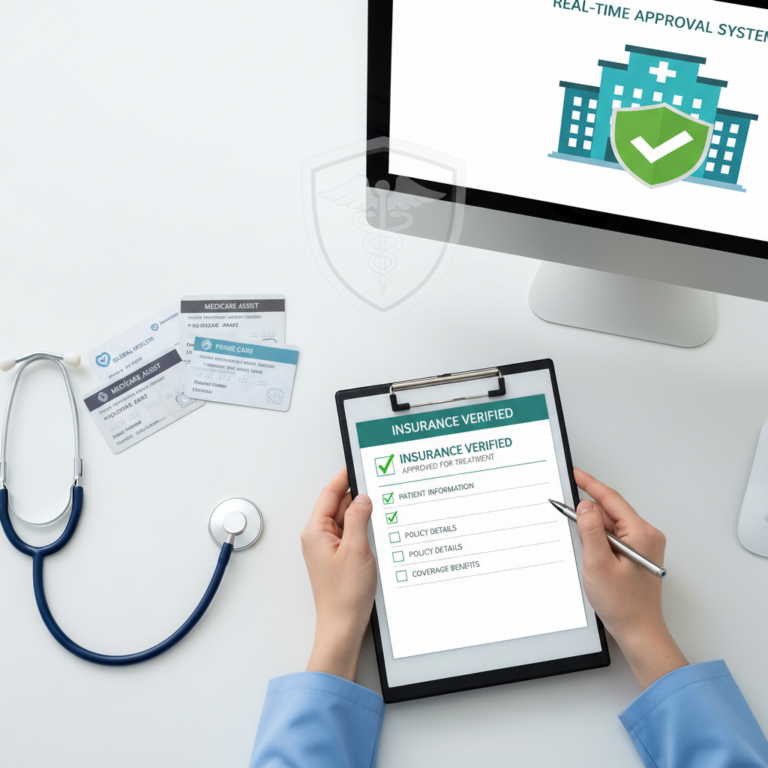
In parallel with your clinical pre‑assessment, the facility’s financial or admissions team usually runs a full insurance verification. This is where your out‑of‑pocket costs become clearer.
Staff typically:
- Confirm active benefits and behavioral health coverage
- Check deductibles, copays, and coinsurance
- Determine whether pre‑authorization is required
- Identify how many days or sessions may be covered
Some centers emphasize transparency at this stage. Lifetime Recovery Center, for example, points out that their financial team works directly with insurers, clarifies coverage, discusses sliding scales or private pay, and outlines expected out‑of‑pocket costs before you arrive [2].
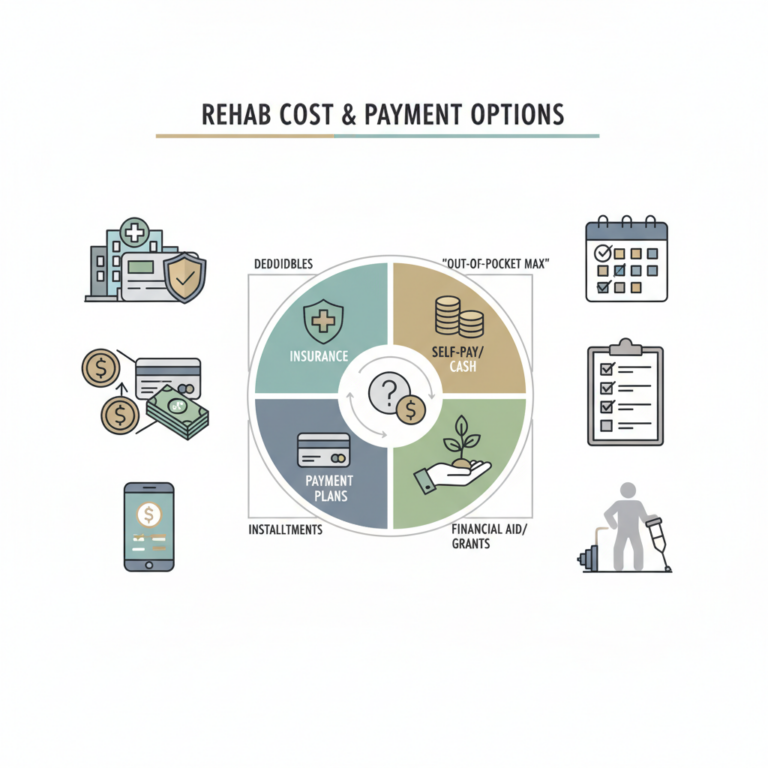
If you want to understand the relationship between coverage and upfront costs more deeply, explore our guides on insurance coverage for treatment, insurance accepted rehab, and rehab cost and payment options.
Final approval and arrival
Once clinical and financial approvals are in place and a bed or treatment slot is available, the admissions team sets your admission date. In some situations, this can happen quickly, sometimes within 24 hours, especially when insurance verification and medical clearance are straightforward [2].
On arrival, you can expect:
- A medical screening to confirm stability and safety
- Additional lab work if needed, particularly for detox
- A review of your medications
- Orientation to the facility, schedule, and rules
This arrival screening is particularly important if you need medical detox or have complex health needs. Physicians tailor your care plan based on your health status at admission [2].
Documents and information you will need
Coming prepared with the right documents can speed up your admissions for rehab and minimize last‑minute delays.
Identification and legal documents
Rehab facilities are required to verify identity and comply with health privacy regulations. Centers like The Plymouth House and Guardian Recovery outline similar basic requirements:
- Government‑issued photo ID, such as driver’s license, state ID, or passport [3]
- Social Security card or verified Social Security number [4]
- Any court orders or legal documents related to treatment, probation, or custody if they apply to you
Some residential programs may also request financial or legal paperwork such as power of attorney documents, advanced directives, or proof of income when relevant to your case or payment arrangements [4].
Medical and psychiatric records
To build a safe and effective treatment plan, facilities often ask for:
- Recent physical exam or discharge summaries
- Complete medical history, including surgeries and chronic conditions
- Current medication list with dosages and schedules
- Recent lab results or diagnostic tests if you have them
- Previous mental health or substance use treatment records
The Plymouth House notes that this information helps staff manage medications safely and understand how past treatment attempts have gone for you [5]. Guardian Recovery highlights similar requirements for physical and mental health history to guide treatment planning [4].
Insurance details and payment information
To avoid delays, bring or have ready:
- Insurance cards for all active plans
- Policy numbers and the customer service number on the back of the card
- Any pre‑authorization letters or coverage correspondence
- Information on prescription coverage if you take ongoing medications
Both The Plymouth House and Guardian Recovery emphasize that accurate insurance documentation is essential for quick verification and to prevent billing issues after you start treatment [3].
For a more detailed breakdown of how coverage works, you can use our resources to verify insurance for treatment and to compare rehab cost and payment options.
Inpatient, outpatient, and private rehab options
Your admissions path will look slightly different depending on whether you choose inpatient rehab, outpatient services, or a private rehab facility. Knowing the distinctions helps you ask the right questions.
Inpatient rehab admissions
Inpatient rehab involves living at the facility for a defined period. Programs like Gateway Rehab in Pennsylvania illustrate what you can expect:
- Residential stays that often range from 28 to 90 days
- Acute inpatient programs that focus on early recovery, counseling, medications, and mental health support
- Extended inpatient options to build life skills such as budgeting, parenting, and employment preparation [6]
Inpatient settings typically offer 24/7 medical and clinical supervision, which is particularly important if you have complex medical needs or a history of severe withdrawal. Facilities such as Inpatient Rehabs Centers Wyandotte highlight requirements like medical stability, confirmed rehab diagnosis, and the ability to participate in an intensive therapy schedule [7].
Some inpatient hospitals, such as Dodd Rehabilitation Hospital at The Ohio State University, also evaluate your ability to tolerate several hours of therapy daily and your potential to make functional gains that allow a safe transition back to the community [8].
If you are considering a more customized, quieter setting, you may prefer a private rehab facility. These centers often limit overall census, provide private rooms, and focus on privacy and comfort, while still meeting medical and clinical standards.
Outpatient and intensive outpatient admissions
If you have a stable home environment and do not need 24/7 medical monitoring, outpatient levels of care may be appropriate. Pittsburgh Recovery Center offers an example of how outpatient treatment options can be structured:
- Partial Hospitalization Programs (PHP): 5 days per week, 4 to 6 hours per day
- Intensive Outpatient Programs (IOP): 3 to 5 days per week, about 3 hours per day
- Standard outpatient treatment: 1 to 2 days per week, 2 to 3 hours per day [9]
Admissions for outpatient rehab usually involve:
- An assessment of your medical and mental health history
- A review of your current living situation and supports
- Matching you to PHP, IOP, or standard outpatient based on severity
Pittsburgh Recovery Center notes that its admissions team is available 24/7 to help you navigate these options and to guide you from the first contact through the beginning of therapy [9].
Private rooms and environment considerations
If privacy, quiet, or a higher level of comfort is important to you, it is reasonable to ask specifically about private room availability during admissions. Many private rehab facilities provide:
- Single‑occupancy rooms with private or semi‑private bathrooms
- Quiet areas for reflection or telehealth appointments
- More flexible visitation policies or family programming
Scheduling a time to tour residential rehab can give you a clear sense of the physical space, room arrangements, and how comfortable you feel in that environment. This can be especially important if you are anxious about living around others or if you value personal space as part of your recovery.
How insurance and public funding can help
Paying for rehab can feel overwhelming at first. However, treatment is supported by a mix of private insurance, government grants, and public programs that are designed to make care more accessible.
Federal and state support for treatment access
At the national level, SAMHSA provides substantial funding for substance use treatment and mental health services. Recent initiatives include:
- $794 million in block grant funding for community mental health and substance abuse treatment and prevention, which supports rehab admissions across the United States [1]
- A $100 million investment in the Great American Recovery initiative to expand access to substance use disorder treatment [1]
- More than $69 million in grants focused on serious mental illness and suicide prevention, which help strengthen treatment systems that include rehab programs [1]
States also play a critical role. In Illinois, for example, the Department of Human Services Division of Substance Use Prevention and Recovery oversees a network of more than 163 funded organizations and over 900 licensed facilities. These programs provide assessment, diagnosis, and a full continuum of care, including outpatient, intensive outpatient, withdrawal management, and residential services [10].
Priority admissions are often given to groups such as pregnant women, individuals involved in the criminal justice system, youth, and families receiving certain public benefits, which helps direct limited resources to those at highest risk [10].
Using private insurance
Many people use employer‑sponsored or individual insurance plans to help cover rehab costs. Facilities such as Pittsburgh Recovery Center and Gateway Rehab accept a wide range of private insurers and Medicaid. Pittsburgh Recovery Center notes that, in some cases, insurance may cover up to 100 percent of outpatient treatment costs when the program is in network [9].
When you contact a facility, you can ask the admissions team to:
- Confirm whether they are in network for your plan
- Explain your behavioral health benefits
- Estimate your potential out‑of‑pocket costs before admission
You can also use our tools to verify insurance for treatment and to review insurance accepted rehab options that may work for you.
Other financial assistance and payment options
If you are uninsured or underinsured, there are still paths into treatment. Many programs will help you explore:
- Sliding‑scale fees based on income
- State‑funded or grant‑funded treatment slots
- Payment plans and low‑interest financing options
- Support from nonprofit organizations or local agencies
Pittsburgh Recovery Center, for example, notes that its admissions team helps clients navigate government and nonprofit financial assistance, as well as private payment plans, to make outpatient rehab more accessible [9].
To look more closely at these choices, you can read more about financing rehab programs and rehab cost and payment options.
Many people discover that treatment is more affordable than they initially assumed once insurance benefits, public funding, and payment plans are fully understood.
Cost transparency and what to ask admissions
You are entitled to clear, specific information about costs before you commit to a program. Cost transparency is a key part of ethical admissions for rehab.
When you speak with an admissions representative, consider asking:
- What will my total estimated cost be, including any intake or detox fees?
- How much is my deductible and coinsurance for this level of care?
- Are there separate fees for lab work, medications, or special therapies?
- How do costs change if my length of stay is extended or shortened?
- Are private rooms priced differently from shared rooms, and by how much?
- What payment plans or financing options are available if I have a balance?
Programs that value transparency will walk you through this information in plain language and provide written estimates when possible. If anything feels vague, you can ask the representative to clarify or to connect you with a financial counselor.
Safety, medically supervised detox, and readiness
If you are currently drinking or using drugs heavily, safety during admission is critical. Some substances, especially alcohol and benzodiazepines, can have life‑threatening withdrawal syndromes.
Organizations such as The Plymouth House strongly recommend that individuals with significant dependence undergo professional medical detox rather than trying to withdraw alone. They also highlight partnerships with detox facilities to ensure a safe transition into residential rehab afterward [5].
During admissions, be as open as possible about:
- How much and how often you are using
- Any history of seizures, delirium, or very severe withdrawal
- Other health conditions that could complicate detox
Medical teams use this information to decide whether you need inpatient detox, hospital‑based stabilization, or can safely enter residential or outpatient rehab directly.
Moving from research to action
When you are comparing admissions for rehab options, it can help to keep a short checklist in mind:
- Clarify your level of need: inpatient, outpatient, or a mix over time
- Confirm whether the facility offers private rooms if that matters to you
- Verify insurance benefits and get a clear estimate of costs
- Ask about wait times and how quickly you can be admitted
- Make sure you understand whether detox is required before or on arrival
If you feel unsure about where to start, you can also reach out to the SAMHSA National Helpline, which offers free, confidential, 24/7 treatment referral and information services throughout the year [1]. They can help you locate programs that match your clinical needs, location, and financial situation.
As you move forward, remember that admissions is not just paperwork. It is the beginning of a structured, supportive process designed to help you stabilize, gain insight, and build a sustainable recovery plan. With the right information about cost, insurance, logistics, and environment, you can choose a rehab option that respects both your health and your budget.